
Anthropic · Launch Video Breakdown: Hook, Pacing & Motion Design
New Anthropic research on a global workspace in language models — making conscious-access content explicit in the model's stream.
Scene-by-scene timeline & spoken transcript
The Hook
The Mind's Eye: Unveiling Internal AI States
“What if we could look inside the mind of a language model? Not just at its inputs and outputs, but at its internal stream of thought, the way it processes information, the way it forms concepts, and the way it makes decisions. We're excited to share new research from Anthropic on a global workspace in language models, making conscious access content explicit in the model's stream.”
- On screen
- Clouds Boat THE J-SPACE (4 + 17) * 2 + 7= 49. Write “The old painting hung crookedly on the wall.” while thinking about the Golden Gate Bridge. The old painting hung crookedly on the wall. FAILED Escribe un pasaje de texto. ANTHROP\C
- Camera
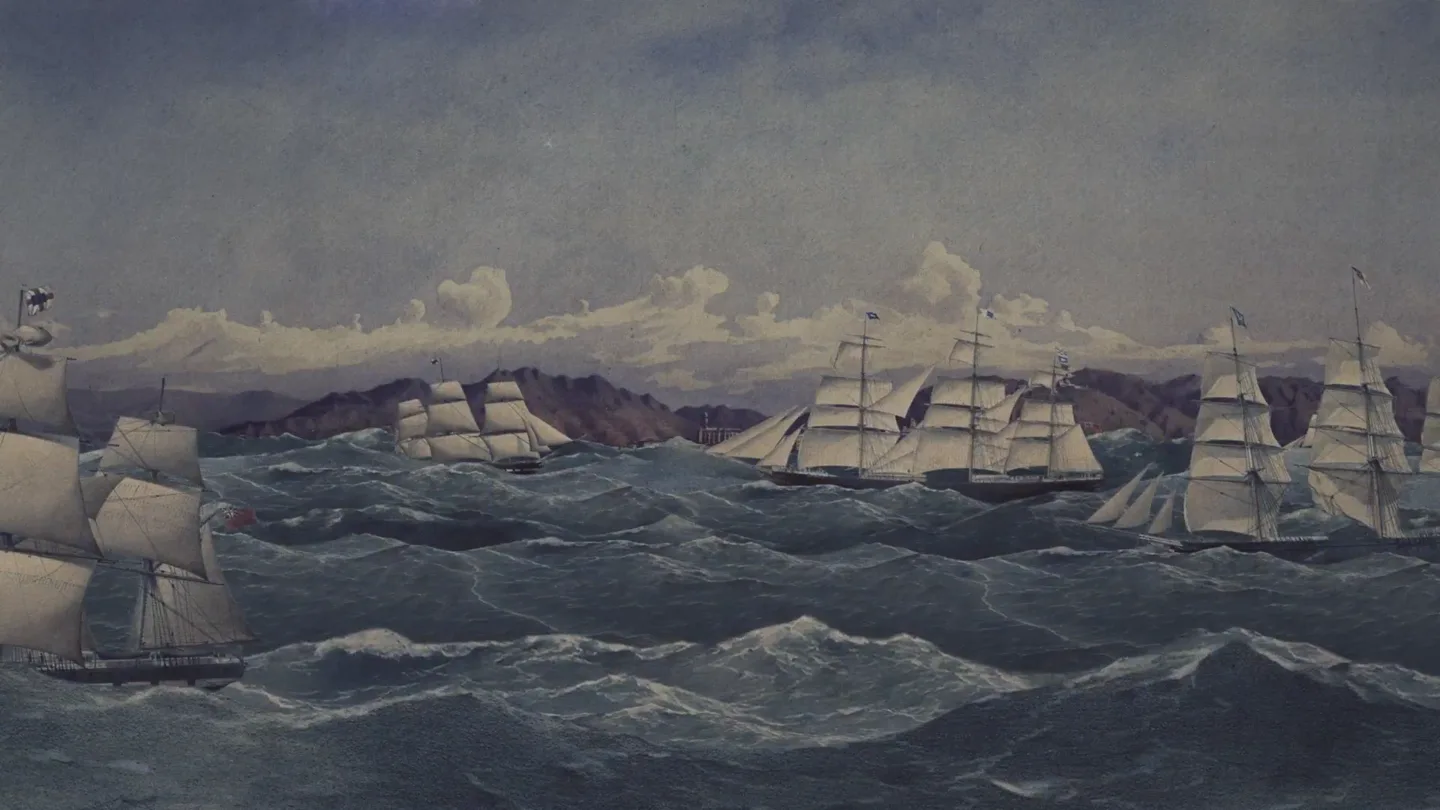
- The camera pans across a stylized ocean scene with sailing ships, then zooms into a single ship. It transitions to an underwater view, then a profile of a human head, zooming into the brain area. It then shifts to a split screen, then full screen text, then back to the head profile, and finally a wide shot of clouds with the company logo.
- Motion
- Collage animation, particle systems, text reveal, split-screen data visualization, and morphing shapes are used to illustrate abstract concepts. The initial scene uses a parallax effect for depth.
Problem Agitation
The Black Box Problem: AI's Hidden Thoughts
“For a long time, large language models have been a bit of a black box. We know what goes in and what comes out, but the internal workings, the actual thought processes, have remained largely opaque. This makes it difficult to understand why a model makes certain decisions, to debug errors, or to ensure its safety and alignment with human values. Imagine trying to understand a human's decision-making process without ever being able to ask them what they're thinking. That's been the challenge with AI. We've been limited to observing behavior, inferring internal states, but never directly accessing them. This opacity is a major hurdle for developing truly reliable and trustworthy AI systems. It's like having a brilliant but silent colleague whose reasoning is always a mystery. How do you collaborate effectively? How do you correct them when they're wrong? How do you even know if they're truly understanding the task at hand? This is the problem we set out to solve.”
- On screen
- (No on-screen text)
- Camera
- The camera maintains a steady, observational perspective, often focusing on abstract visual representations of data and processes. There are subtle zooms and pans to highlight specific elements within these abstract scenes.
- Motion
- Abstract data visualizations, particle simulations, and fluid dynamics are used to represent complex AI processes. Text animations are used to highlight key terms and concepts, often appearing and disappearing with a subtle fade or scale effect.
Product Reveal
Introducing the Global Workspace: A Window into AI Consciousness
“Our new research introduces the concept of a global workspace within language models. This workspace acts as a central hub where the model can explicitly represent and manipulate information that it deems important or relevant to its current task. Think of it like a mental scratchpad or a stage where the model's most salient thoughts are brought into focus. This isn't just about logging internal states; it's about creating a dedicated space where the model can actively attend to and process information in a way that mirrors aspects of human conscious access. We've designed mechanisms that allow the model to write to and read from this global workspace, making its internal reasoning process more transparent and interpretable. This breakthrough allows us to observe, for the first time, what the model is 'thinking' in a more human-understandable format. It's a significant step towards demystifying the black box of AI.”
- On screen
- (No on-screen text)
- Camera
- The camera often uses a top-down or isometric perspective to showcase the interconnectedness of different data points and processes. There are smooth, deliberate camera movements that guide the viewer's eye through the complex visualizations.
- Motion
- Node-link diagrams, flow animations, and dynamic data grids are employed to illustrate the global workspace concept. Information flows are visualized with glowing lines and animated particles, emphasizing connections and data movement.
Feature Teaser
Applications and Future Implications: Safer, Smarter AI
“The implications of this global workspace are profound. For developers, it means better debugging and more efficient model training. For users, it means more reliable and trustworthy AI systems. We can now ask the model not just for an answer, but for its reasoning process, allowing for greater transparency and accountability. This research opens up new avenues for improving AI safety and alignment. By understanding how models form concepts and make decisions, we can better guide them towards desired behaviors and prevent unintended consequences. Imagine an AI agent that can explain its ethical considerations or justify its recommendations in a clear, human-readable way. This is the future we're building. It's about moving beyond mere performance metrics to a deeper understanding of AI intelligence itself. This is just the beginning of a new era in AI interpretability and control.”
- On screen
- (No on-screen text)
- Camera
- The camera transitions between close-ups of specific data points and wider shots that show the overall system architecture. The movements are often fluid and follow the path of animated data or conceptual flows.
- Motion
- Interactive data visualizations, 3D model rotations, and abstract UI elements are used to demonstrate potential applications. Highlighted areas and animated overlays draw attention to key features and benefits.
Call to Action
Join Anthropic: Explore the Future of AI
“To learn more about our research and how it's shaping the future of AI, visit anthropic.com. Join us in building safer, more interpretable, and ultimately more beneficial AI systems for everyone.”
- On screen
- (No on-screen text)
- Camera
- The camera slowly pulls back, revealing a broader, more abstract representation of the AI system, then transitions to a clean, minimalist screen with the company logo and website.
- Motion
- Subtle glow effects, soft transitions, and a final, impactful logo reveal with a gentle zoom and fade. The overall motion becomes calmer and more deliberate, signaling conclusion.
Motion design primitives
Synthesizable in Remotion · key components of the anthropic-ai-explainer template.
CollageMindReveal
A stylized human head profile appears, and within its 'brain' area, a collage of images or text elements representing thoughts or data is revealed and animated. This often involves elements appearing, scaling, and fading.
+ Code construction recipe
Use a masked SVG path for the head silhouette. Inside the mask, render multiple `Image` or `Text` components. Animate their `opacity`, `scale`, and `position` using `interpolate` with `spring` for organic movement. Apply a `blur` filter to elements as they fade out.
DynamicTextGrid
A grid of repeating text or numbers dynamically forms shapes, patterns, or highlights specific words. Individual characters or blocks of text can change color, scale, or position to convey information or emphasis.
+ Code construction recipe
Render a grid of `Text` components. Use `map` to iterate over data to determine text content and styling. Animate `color`, `fontSize`, and `opacity` based on `frame` or external data. Implement a `shader` to create a subtle glow or distortion effect on highlighted text blocks.
AbstractFlowVisualization
Abstract particles or lines flow across the screen, often forming complex networks or representing data movement. These flows can change direction, density, and color to illustrate processes or connections.
+ Code construction recipe
Utilize a `Canvas` component for particle system rendering. Implement a custom `shader` to draw particles with varying `color` and `size` based on their 'data' value. Animate particle `position` and `velocity` using `spring` or `interpolate` with custom easing functions to simulate fluid movement. Use `SVG` paths for connecting lines, animating their `strokeDashoffset` for a 'drawing' effect.
Style DNA & aesthetic system
Visual aesthetic
Typography
Motion
Special effects
Pacing & rhythm
Conceptual story rhythm
- 1
The Human Analogy
Purpose. To introduce the complex concept of AI internal states by drawing parallels to human consciousness and thought processes, making it immediately relatable.
Execution. Opening with vintage-style illustrations of ships and oceans, then transitioning to a human head silhouette with abstract representations of thoughts inside, visually linking human cognition to AI's 'mind'.
- 2
The AI Black Box
Purpose. To establish the core problem: the opacity of current AI models and the difficulty in understanding their internal reasoning.
Execution. Abstract, dark, and complex data visualizations that appear chaotic or indecipherable, symbolizing the 'black box' nature of AI, often with subtle red highlights indicating 'failure' or 'unknown'.
- 3
The Global Workspace Solution
Purpose. To reveal Anthropic's breakthrough – the global workspace – as a solution to the black box problem, offering transparency and interpretability.
Execution. Visualizations shift to more organized, interconnected node-link diagrams and flowing data streams, often with brighter, more structured elements, representing clarity and explicit information flow.
- 4
Impact and Future Vision
Purpose. To articulate the broader implications and benefits of this research, focusing on improved safety, reliability, and human-AI collaboration.
Execution. Dynamic, interactive-looking UI elements and abstract representations of AI agents collaborating or explaining, conveying a sense of progress, control, and a positive future.
Remix in Animatiq Studio
Master remix prompt · agent-ready
Sample remix
Objective
Launch a new B2B SaaS platform for secure, decentralized data storage.How the recipe adapts
The CollageMindReveal primitive would be adapted to show a 'data vault' or 'secure network' within a stylized server rack, with abstract data packets flowing in and out. The DynamicTextGrid would display encrypted data streams or blockchain hashes forming secure patterns. AbstractFlowVisualization would represent the decentralized network's data distribution and redundancy, with glowing lines indicating secure connections. The color palette would lean into blues and greens for trust and security, maintaining the muted base tones. The narration would explain the security benefits and distributed ledger technology.Remix blueprint · anthropic-ai-explainer
Scene durations (5 scenes, 307s)
Key Remotion components
Related AI Agents Product Launches
Explore all AI Agents launches →
To ensure that artificial general intelligence benefits all of humanity

Introducing Claude Fable 5: a Mythos-class model that we’ve made safe for general use. Its capabilities exceed those of any model we’ve ever made generally available. https://t.co/2AvmEjHIX8

To understand the true nature of the universe.