

Evan · Launch Video Breakdown: Hook, Pacing & Motion Design
Anthropic owned Claude just posted this: “Introducing Claude Science, a new app designed with every stage of research in mind.”
Scene-by-scene timeline & spoken transcript
The Hook
Introducing Claude Science: AI for Scientific Research
“(No spoken dialogue — Ambient electronic score with rhythmic sound design, driving percussive beat, sub-bass, atmospheric pads, and evolving synth textures. BPM: 120)”
- On screen
- Claude Introducing Claude Science for scientific research
- Camera
- Close-up on a scientist, then a quick cut to a digital interface, followed by a subtle zoom into the UI elements.
- Motion
- Rapid cuts between live-action and UI, subtle UI element animations (e.g., text input, button clicks).
Product Reveal
Streamlined Research Workflows with AI Agents
“(No spoken dialogue — Ambient electronic score with rhythmic sound design, driving percussive beat, sub-bass, atmospheric pads, and evolving synth textures. BPM: 120)”
- On screen
- PAH R408 in structural context (PDB 1J8U, 1.5 Å) 22.6 Å R408 sits ~23 Å from the active-site cofactor — a peripheral, structural position; R408W destabilizes the fold rather than directly blocking catalysis. R408 (rs5030858, R408W site) BH4 cofactor (H4B) Catalytic Fe(II) Code Execution Log Messages Environment Review Download script LLM-generated reconstruction - see Execution Log for the raw record import subprocess import matplotlib import matplotlib.use("Agg") import matplotlib.pyplot as plt import matplotlib.image as mpimg from matplotlib.patches import Patch import json plt.rcParams.update({"font.family": "DejaVu Sans", "svg.fonttype": "none"}) # Generate the PyMOL rendering import shutil shutil.copy("pah_receptor.pdb", "pah_receptor.pdb") shutil.copy("bh4_crystal.pdb", "bh4_crystal.pdb") pml_script = """reinitialize bg_color white set ray_opaque_background, 0 set orthoscopic, 1 set ray_shadows, 0 set antialias, 2 set cartoon_transparency, 0.0 load pah_receptor.pdb, rec load bh4_crystal.pdb, bh4 hide everything • allo (allosteric near R408) = Pocket #19, druggability 0.000, 4.25 Å from R408-Ca • R408-Ca → BH4 centroid = 22.59 Å (distal allosteric site) Now rendering figures. Let me install py3dmol for high-quality structure rendering and set up figure styling. Installing py3dmol in pah-pocket env For static publication-quality 3D renders, PyMOL is more reliable than py3dmol (which needs a headless browser). I'll use the pymol env. First let me copy the pocket alpha-sphere files I need and write the rendering scripts. Staging pocket alpha-sphere files for rendering Now let me write the PyMOL rendering scripts for both figures. Writing PyMOL script for R408 structure figure Good render — R408 (red), BH4 cofactor (blue), Fe (orange), dashed distance line. Let me add a clean distance label and title via matplotlib compositing, and render the pockets figure. Writing PyMOL script for pockets figure The allo pocket (red) shows well but the buried bh4 active-site pocket (blue) i is hidden behind the surface. Let me increase receptor transparency so both pockets are visible. Re-rendering pockets figure with higher transparency This label is hard to see Save Finessing...
- Camera
- Static screen capture, then subtle mouse cursor movements and text input animations.
- Motion
- UI element reveals, text typing simulation, cursor interaction, modal pop-ups with subtle fades.
Feature Teaser
Automated Compute Management and Literature Review
“(No spoken dialogue — Ambient electronic score with rhythmic sound design, driving percussive beat, sub-bass, atmospheric pads, and evolving synth textures. BPM: 120)”
- On screen
- Manages your compute Start a Modal job? H100 ESMFold2 PAH+COLCHICINE co-fold (shard 1/50) — 1× H100 Agent-supplied summary — review the command before allowing. Command export HF_HOME=/datavol_esm/hf_cache && SHARD=1 python run_shard.py → mounts Modal volume (RW, workspace-scoped): operon-esm-cache → /datavol_esm Runs on your Modal account (modal profile 'anthropic'): H100 • 8 CPU • 32 GiB — billed per second, for up to 55m (40m timeout + staging margins). Rates: modal.com/pricing The container runs at most 40m, then stages outputs and shuts down. The concurrency cap in Settings → Compute applies even with "Always allow". Allow this conversation Deny Scope applies to any job on modal. • host.compute.job.byoc:modal/19e88641-10c9-45d2-b4d4-89d6d4a67033 > recover with host.compute.create('byoc:modal').attach_job('19e88641-10c9-45d2-b4d4-89d6d4a67033') > shard 02 LIG187 LAMIVUDINE job_id=19e88641-10c9-45d2-b4d4-89d6d4a67033 <host.compute.job.byoc:modal/5b21bf96-d126-4901-a5b3-876e028eaf8d state=submitted > recover with host.compute.create('byoc:modal').attach_job('5b21bf96-d126-4901-a5b3-876e028eaf8d') > shard 03 LIG148 SPIRIONOLACTONE job_id=5b21bf96-d126-4901-a5b3-876e028eaf8d ESMFold2 PAH+SELUMETINIB co-fold (shard 0/50) — 1× H100 failed (exit 1) Shard 0 failed in 12 s (exit 1) — that's an early crash, before model load. Waiting for the dispatch loop to finish so I can read its stderr. GENERATED 3 50 rows • 6 columns es_manifest.csv manifest.json run_shard.py Send a message to interrupt Reviewing ... Notebook 3 running 1m 14s Ask anything — @ for artifacts, # for sessions, / for skills, HK to search... Opus 4.8 Running jobs in this session ESMFold2 PAH+COLCHICINE co-fold (shard 1/50) — 1× H100 Modal sb-upt2035... view submission H100 ESMFold2 PAH+LAMIVUDINE co-fold (shard 2/50) — 1× H100 Modal sb-LqKWrn... view submission H100 ESMFold2 PAH+SPIRIONOLACTONE co-fold (shard 3/50) — 1× H100 Modal sb-2p1cKR... view submission H100 Close Manage compute Waiting on code Write a literature review on cross-species single-cell RNA-seq integration. Pull the primary methods papers and recent benchmarks. Output the report as a LaTeX doc and a compiled PDF. Ran 4 searches, loaded 2 skills, managed environments, +2 more Surveying connectors for PubMed bioRxiv OpenAlex CELLxGENE Finding CELLxGENE Discover atlas tooling Finding LaTeX two-column typesetting skill Finding OpenAlex citation-graph tooling Loading literature-review orchestration skill loaded Loading figure-style for publication plots loaded Checking for tectonic LaTeX environment Finding env with tectonic LaTeX compiler 3 lines of output Planning cross-species scRNA-seq literature review 13 steps Installing requests into dossier env Dispatching five parallel literature-retrieval tracks — PubMed primary methods, bioRxiv preprints, OpenAlex citation counts, CELLxGENE multi-species atlas inventory, and orthology-free embedding methods. Dispatching PubMed bioRxiv OpenAlex CELLxGENE sub-agents 142 lines of output Reviewer 1 finding warn PMID 31178118 assigned to both LIGER and Seurat v3 integration in the plan In the generate_plan PubMed delegation step the agent writes "LIGER (31178118), Seurat v3 integration (31178118)" — the same PMID for two distinct primary methods papers. The same plan's OpenAlex step assigns them different DOIs (Seurat v3 10.1016/j.cell.2019.05.031, LIGER 10.1016/j.cell.2019.05.006), so the plan is internally inconsistent and at least one PMID is wrong. None of the PMIDs or DOIs in msg[10] trace to any in-window tool output — no PubMed/CrossRef/OpenAlex lookup has run (exec-log rows 04494b53, 57baea0a, 254f1378 are the two skill kernel.py auto-loads and the env-filter bash; msg[4] tool_results are skill-catalog listings only). This is the opening user turn so there is no pre-window history to drill. Warn (prose/plan, not a saved artifact) per the fabricated-references exception; the duplicated PMID will propagate to the PubMed sub-agent's query. Go to transcript The agent reads these findings and self-corrects in its next message. Closing fan-out phase, starting synthesis All five retrieval tracks loaded. Loading the tables and building the methods comparison. Ran 17 commands, read 5 files, saved artifacts, +1 more 27 steps - 2 failed Loading PubMed OpenAlex bioRxiv CELLxGENE tables Literature review Cross-species scRNA-seq integration R... + New Customize Files Today SYT1 (5681 Manuscript) Enumerate MCPs and D Cross-species scRNA-s Session Published Submitting structured output for PubMed track PubMed retrieval complete. Eight methods benchmark papers reviewed and verified against title and first author. Four of the supplied PMIDs were correct (SaMAP > 3394782, scVI > 33949338, LIGER > Seurat v3 swapped at 31178118/31178118, Seurat v3 > 31178118). Two supplied PMIDs were off-topic and omitted (33536699 - CellxGENE, 33536699 - unrelated to Pep paper). method pmid year journal first_author doi SaMAP 3394782 2021 eLife Tarashansky AJ 10.7554/eLife.62747 scVI 30504886 2018 Nat Methods Lopez R 2 10.1038/s41592-018-0229- scANVI 33949336 2021 Mol Syst Biol Xu C 10.15252/msb.202102003 LIGER 31178118 2019 Cell Welch JD 10.1016/j.cell.2019.05.006 Seurat v3 31178118 2019 Cell Stuart T 10.1016/j.cell.2019.05.006 Harb 37147819 2023 Nat Methods Korsunsky I 10.1038/s41592-023-01706-x xCB Benchmark 34949812 2021 Nat Methods Luecken MD 8 10.1038/s41592-021-01133-x BENGAL 37838716 2023 Nat Commun Song Y W 10.1038/s41467-023-49855- xspecies_scRNAseq_review.pdf Cross-species single-cell RNA-seq integration: from one-to-one orthologs to protein-language-model embeddings Literature synthesis compiled from PubMed, bioRxiv preprints, and CELLxGENE Discover Paper Years Methods Species pairs Total Manuscript 2018-2023 15 Unstructured 47,340 (0.1%) (Most recent) Figure 1: UMAP embedding of cross-species scRNA-seq integration by ortholog-free embedding methods. The x-axis represents the first UMAP scale. Our method achieves superior performance compared to existing methods because it leverages protein language models to capture complex biological relationships across species. The y-axis represents the second UMAP scale. 1 Problem statement Comparative single-cell datasets are whether a cell type in one species has a homolog in another, and how to identify and characterize it across species remains. The biological debate is that any two species are separated by millions of years of evolution, and their orthology are many-to-many. Protein-language-gem models have been shown to be effective in capturing evolution. The problem of integration across species scRNA-seq data is to infer the cell type of a given species and then to identify its homolog in another species. Narasimhan and BENGAL (2023) report success in a benchmark of cross-species scRNA-seq integration methods. In this work, we propose a new method to integrate cross-species scRNA-seq data that leverages protein language models to capture complex biological relationships across species. We demonstrate that our method achieves superior performance compared to existing methods. 2 Ortholog-subsetting methods Ortholog-subsetting methods are a common strategy to integrate scRNA-seq data across species. These methods identify one-to-one orthologs between species and then use these orthologs to subset the scRNA-seq data. The subsetted data is then used to integrate the data across species. The main limitation of these methods is that they can only integrate data from species that have one-to-one orthologs. This is a problem because many species do not have one-to-one orthologs, and many cell types do not have one-to-one orthologs. In this work, we propose a new method to integrate cross-species scRNA-seq data that leverages protein language models to capture complex biological relationships across species. We demonstrate that our method achieves superior performance compared to existing methods. x_methods.csv Message PubMed...
- Camera
- Focus on UI elements, simulating user interaction and automated processes.
- Motion
- Scrolling text, progress bar animations, dynamic content loading, multi-panel UI transitions.
Call to Action
More Time on Science: Claude Science Public Beta
“(No spoken dialogue — Ambient electronic score with rhythmic sound design, driving percussive beat, sub-bass, atmospheric pads, and evolving synth textures. BPM: 120)”
- On screen
- Less time juggling cluster jobs More time on science Claude Science, now in public beta Claude
- Camera
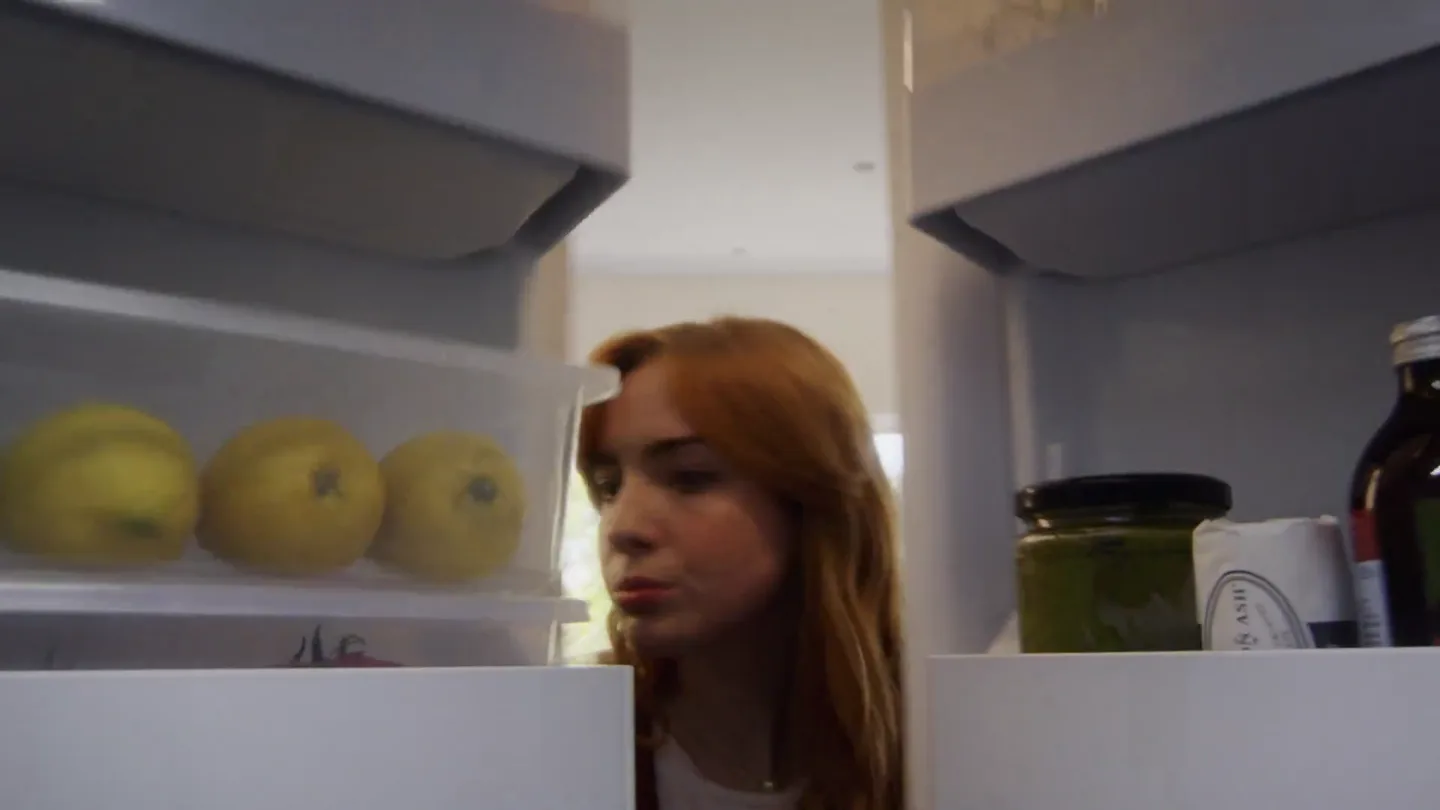
- Return to live-action shot of scientist, then a final fade to the product logo.
- Motion
- Slow zoom on scientist, text overlay with subtle animation, final logo reveal with a soft glow.
Motion design primitives
Synthesizable in Remotion · key components of the ai-scientific-workflow-showcase template.
DynamicUIPanelReveal
A UI panel or modal appears with a subtle fade-in and slight scale-up animation, often accompanied by a background blur or overlay. Content within the panel can then animate in (e.g., text typing, list items appearing).
+ Code construction recipe
Use `spring()` for scale and opacity on a `div` element. Implement `interpolate()` for text content appearing character by character or line by line. Apply a `backdrop-filter: blur()` for the background overlay.
AutomatedTextFlow
Text content appears to be typed out or generated dynamically, often in a code editor or chat interface, with a visible cursor or progress indicator. This is used for displaying code, agent responses, or process logs.
+ Code construction recipe
Utilize `interpolate()` on the `substring()` of a text string based on `frame` to simulate typing. A blinking cursor can be achieved with `opacity` interpolation on a pipe character `|`.
ContextualIconHighlight
Small icons or checkboxes animate to indicate completion or status (e.g., a checkmark appearing, a loading spinner). These are often paired with list items or steps in a process.
+ Code construction recipe
Animate `opacity` and `scale` for checkmark icons using `spring()`. For loading spinners, use `rotate` interpolation on an SVG icon or a CSS `animation` property.
Style DNA & aesthetic system
Visual aesthetic
Typography
Motion
Special effects
Pacing & rhythm
Conceptual story rhythm
- 1
The Vision
Purpose. Establish the product's core purpose and target audience.
Execution. Opens with a human scientist, quickly transitioning to the product name and its scientific application.
- 2
The Solution in Action
Purpose. Demonstrate the product's capabilities through detailed UI interactions.
Execution. Extensive screen recordings showing complex scientific tasks being simplified and automated by the AI agent.
- 3
The Benefit
Purpose. Highlight the tangible advantages and impact of using the product.
Execution. Concise text overlays summarizing benefits ('Manages your compute', 'Less time juggling cluster jobs') followed by relevant UI or live-action shots.
- 4
The Invitation
Purpose. Call the audience to engage with the product.
Execution. Returns to a human element, then a clear call to action for the public beta and a final brand logo reveal.
Remix in Animatiq Studio
Master remix prompt · agent-ready
Sample remix
Objective
Launch an AI legal assistant called 'LexiMind' that automates case brief generation and precedent research.How the recipe adapts
The opening would feature a lawyer reviewing documents, then transition to 'Introducing LexiMind' in an editorial serif font. UI scenes would show LexiMind's interface generating a case brief, highlighting key legal arguments and relevant statutes with dynamic text flow and contextual icon highlights. The 'Manages your compute' equivalent would be 'Automates document analysis', and 'More time on science' would become 'More time on strategy'. The final call to action would be 'LexiMind, now in private preview'.Remix blueprint · ai-scientific-workflow-showcase
Scene durations (4 scenes, 86s)
Key Remotion components
Related AI Agents Product Launches
Explore all AI Agents launches →
To ensure that artificial general intelligence benefits all of humanity
Gopuff introduces Go, an AI shopping assistant built with SpaceXAI: say what you need and the order is placed.

Iliad (Troy) trailer made by Grok Imagine 1.5, which was just released