
OpenAI · Launch Video Breakdown: Hook, Pacing & Motion Design
Preview of Ultrafast mode: GPT-5.6 Sol runs up to 14x faster (up to 750 tokens/s, powered by Cerebras). First rolling out to select OpenAI API customers; built for realtime voice, support, coding, design, finance research and security response.
Scene-by-scene timeline & spoken transcript
The Hook
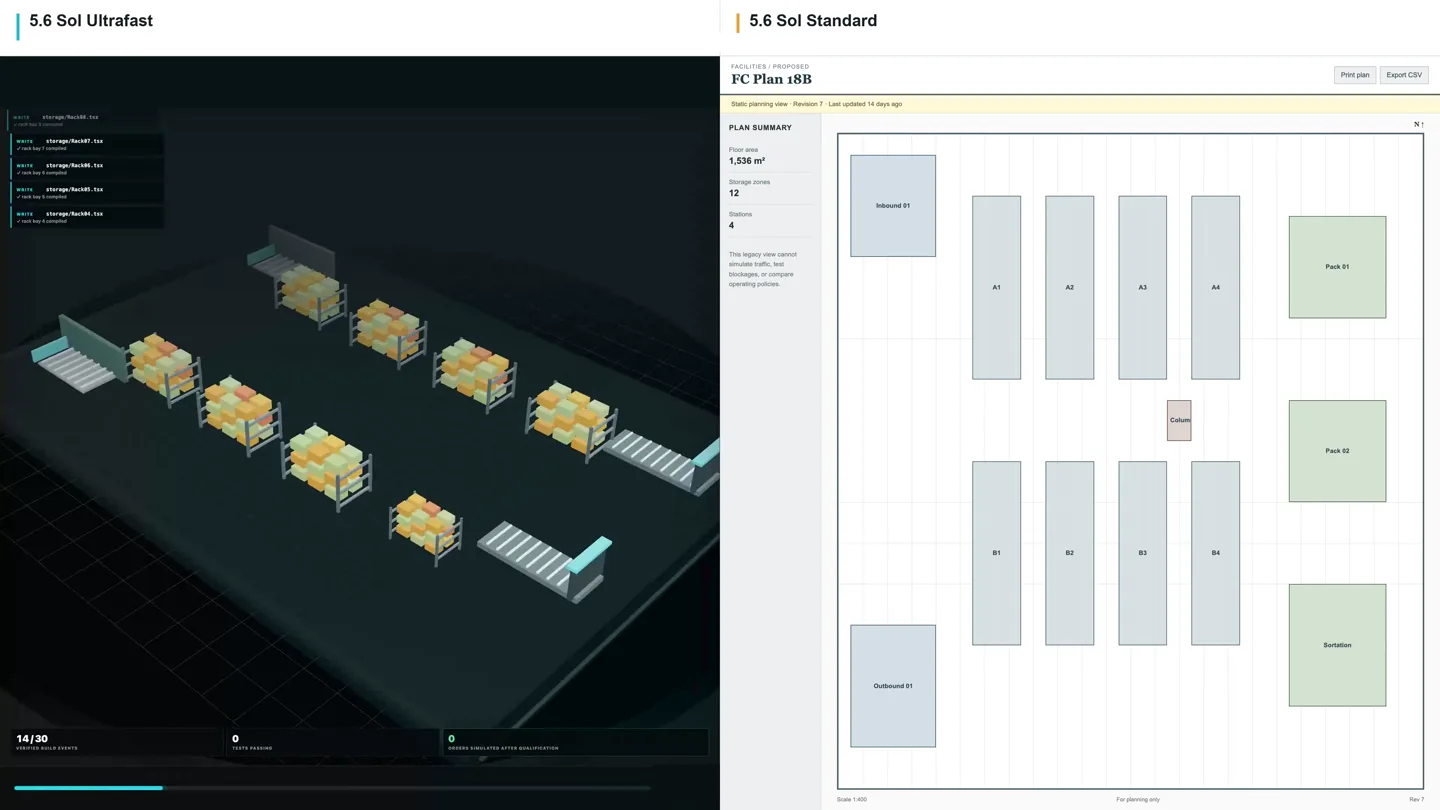
Ultrafast vs. Standard Simulation Start
“(No spoken dialogue — ambient visual with subtle UI sounds)”
- On screen
- 5.6 Sol Ultrafast | 5.6 Sol Standard | FC Plan 18B | PLAN SUMMARY | Floor area 1,536 m² | Storage zones 12 | Stations 4 | This layout cannot simulate traffic, exit blockages, or complete processing cycles. | 1/30 | 0 | 0 | 21/30 | 16 | 3/30 | 0 | 0
- Camera
- Static, wide-angle isometric view of two parallel simulation environments.
- Motion
- Side-by-side comparison, real-time data visualization, and object instantiation.
Product Reveal
Rapid Task Completion Demonstration
“(No spoken dialogue — ambient visual with subtle UI sounds)”
- On screen
- 5.6 Sol Ultrafast | 5.6 Sol Standard | TASK COMPLETE | 30/30 | 84 | 3 | 7/30 | 0 | 0 | 30/30 | 84 | 11 | 9/30 | 0 | 0 | 30/30 | 84 | 18 | 11/30 | 0 | 0 | 30/30 | 84 | 26 | 13/30 | 0 | 0 | 30/30 | 84 | 34 | 15/30 | 0 | 0 | 30/30 | 84 | 41 | 17/30 | 0 | 0 | 30/30 | 84 | 49 | 19/30 | 0 | 0 | 30/30 | 84 | 57 | 21/30 | 16 | 0 | 30/30 | 84 | 64 | 23/30 | 32 | 0 | 30/30 | 84 | 71 | 25/30 | 48 | 0 | 30/30 | 84 | 79 | 27/30 | 64 | 0 | 30/30 | 84 | 86 | 30/30 | 84 | 0 | 30/30 | 84 | 95 | 30/30 | 84 | 0 | 30/30 | 84 | 96 | 30/30 | 84 | 0 | 30/30 | 84 | 96 | TASK COMPLETE | 30/30 | 84 | 14
- Camera
- Static, wide-angle isometric view, maintaining the split-screen comparison.
- Motion
- Accelerated simulation, object movement, and progress bar filling to highlight speed difference.
Feature Teaser
Comparative Efficiency in Action
“(No spoken dialogue — ambient visual with subtle UI sounds)”
- On screen
- 5.6 Sol Ultrafast | 5.6 Sol Standard | TASK COMPLETE | 30/30 | 84 | 96 | TASK COMPLETE | 30/30 | 84 | 22 | 30/30 | 84 | 96 | TASK COMPLETE | 30/30 | 84 | 29 | 30/30 | 84 | 96 | TASK COMPLETE | 30/30 | 84 | 37
- Camera
- Static, wide-angle isometric view, continuing the split-screen comparison.
- Motion
- Persistent side-by-side comparison, highlighting the 'Ultrafast' side completing tasks significantly faster.
Call to Action
Final Speed Differential & Product Benefits
“(No spoken dialogue — ambient visual with subtle UI sounds)”
- On screen
- 5.6 Sol Ultrafast | 5.6 Sol Standard | TASK COMPLETE | 30/30 | 84 | 96 | TASK COMPLETE | 30/30 | 84 | 45 | Preview of Ultrafast mode: GPT-5.6 Sol runs up to 14x faster (up to 750 tokens/s, powered by Cerebras). First rolling out to select OpenAI API customers; built for realtime voice, support, coding, design, finance research and security response.
- Camera
- Static, wide-angle isometric view, then a subtle zoom out to reveal the full product tagline.
- Motion
- Final comparison freeze-frame, followed by a text overlay revealing key product benefits and availability.
Motion design primitives
Synthesizable in Remotion · key components of the split-screen-performance-showcase template.
DualTerminalRaceSplit
Two identical simulation environments run side-by-side, one significantly faster than the other, demonstrating a performance advantage.
+ Code construction recipe
Use two `<Canvas>` components or `<AbsoluteFill>` containers, each rendering an identical 3D scene (e.g., using `three.js` or `R3F`). Synchronize their initial states but apply a speed multiplier to the 'Ultrafast' side's animation loop or state updates. Implement a vertical divider line that can subtly animate.
IsometricGridFlow
Objects move and stack on an isometric grid, simulating a logistical or computational process, with progress indicators updating in real-time.
+ Code construction recipe
Render a 3D isometric grid using `three.js` or `R3F`. Create animated 3D box models for 'packages' and 'robots'. Use `interpolate()` for position and rotation animations along predefined paths. Update progress bars and counters based on the simulation's internal state, driven by `useCurrentFrame()` and `spring()` for smooth transitions.
DynamicMetricOverlay
Real-time metrics (e.g., 'BUILD EVENTS', 'TASKS IN PROGRESS') update rapidly, showcasing the efficiency and progress of the simulation.
+ Code construction recipe
Overlay text elements using `AbsoluteFill` and `Text` components. Bind the text content to dynamic variables that update based on the simulation's progress. Use `spring()` or `interpolate()` with `easeOutCubic` for smooth, rapid number transitions and subtle color changes (e.g., green for 'TASK COMPLETE').
Style DNA & aesthetic system
Visual aesthetic
Typography
Motion
Special effects
Pacing & rhythm
Conceptual story rhythm
- 1
The Setup
Purpose. Introduce the core comparison and establish the baseline 'Standard' performance.
Execution. Split-screen view with 'Ultrafast' and 'Standard' labels, showing initial static states of the simulation.
- 2
The Race Begins
Purpose. Visually demonstrate the dramatic speed difference between the two modes.
Execution. Both simulations start, with the 'Ultrafast' side rapidly processing tasks and filling its progress bar, while 'Standard' lags significantly.
- 3
Dominant Performance
Purpose. Reinforce the 'Ultrafast' mode's superior efficiency and completion.
Execution. The 'Ultrafast' side completes its 'TASK COMPLETE' state, while the 'Standard' side continues to struggle, highlighting the performance gap.
- 4
The Reveal
Purpose. Connect the visual demonstration to the product's core benefits and applications.
Execution. A final freeze-frame of the completed 'Ultrafast' simulation, followed by a full-screen text overlay detailing GPT-5.6 Sol's speed and use cases.
Remix in Animatiq Studio
Master remix prompt · agent-ready
Sample remix
Objective
Launch a new cloud-based data processing service, 'QuantumFlow', showcasing its speed advantage over traditional methods.How the recipe adapts
The DualTerminalRaceSplit primitive would show 'QuantumFlow' on the left and 'Traditional Processing' on the right. IsometricGridFlow would animate data packets moving through a network, with 'QuantumFlow' processing and routing them at a visibly accelerated rate. DynamicMetricOverlay would display 'Data Processed' and 'Latency' metrics, with QuantumFlow's numbers updating much faster and showing lower latency. The final text overlay would highlight QuantumFlow's throughput and cost efficiency.Remix blueprint · split-screen-performance-showcase
Scene durations (4 scenes, 44s)
Key Remotion components
Related AI Agents Product Launches
Explore all AI Agents launches →
To ensure that artificial general intelligence benefits all of humanity
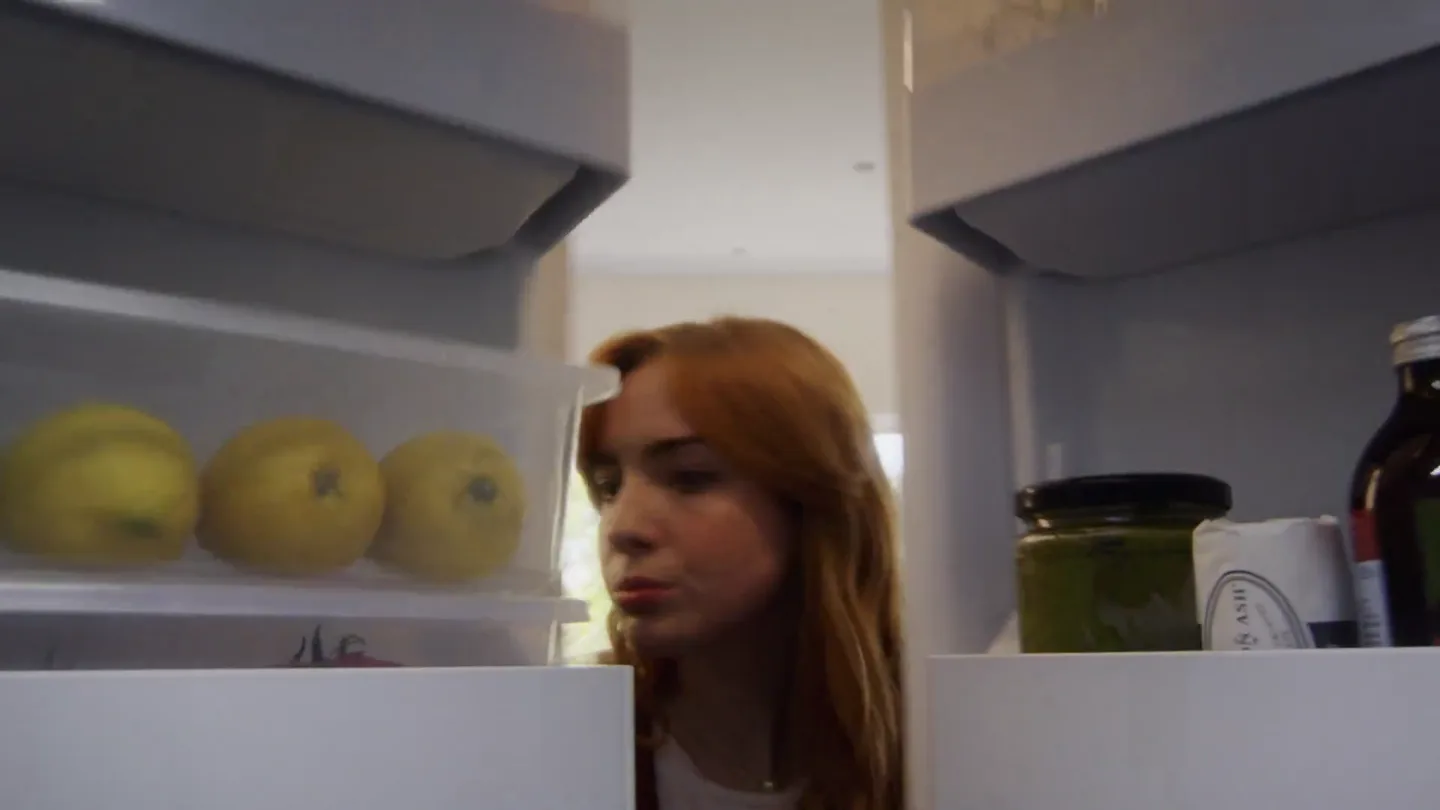
Gopuff introduces Go, an AI shopping assistant built with SpaceXAI: say what you need and the order is placed.

Iliad (Troy) trailer made by Grok Imagine 1.5, which was just released