
Prasenjit · Launch Video Breakdown: Hook, Pacing & Motion Design
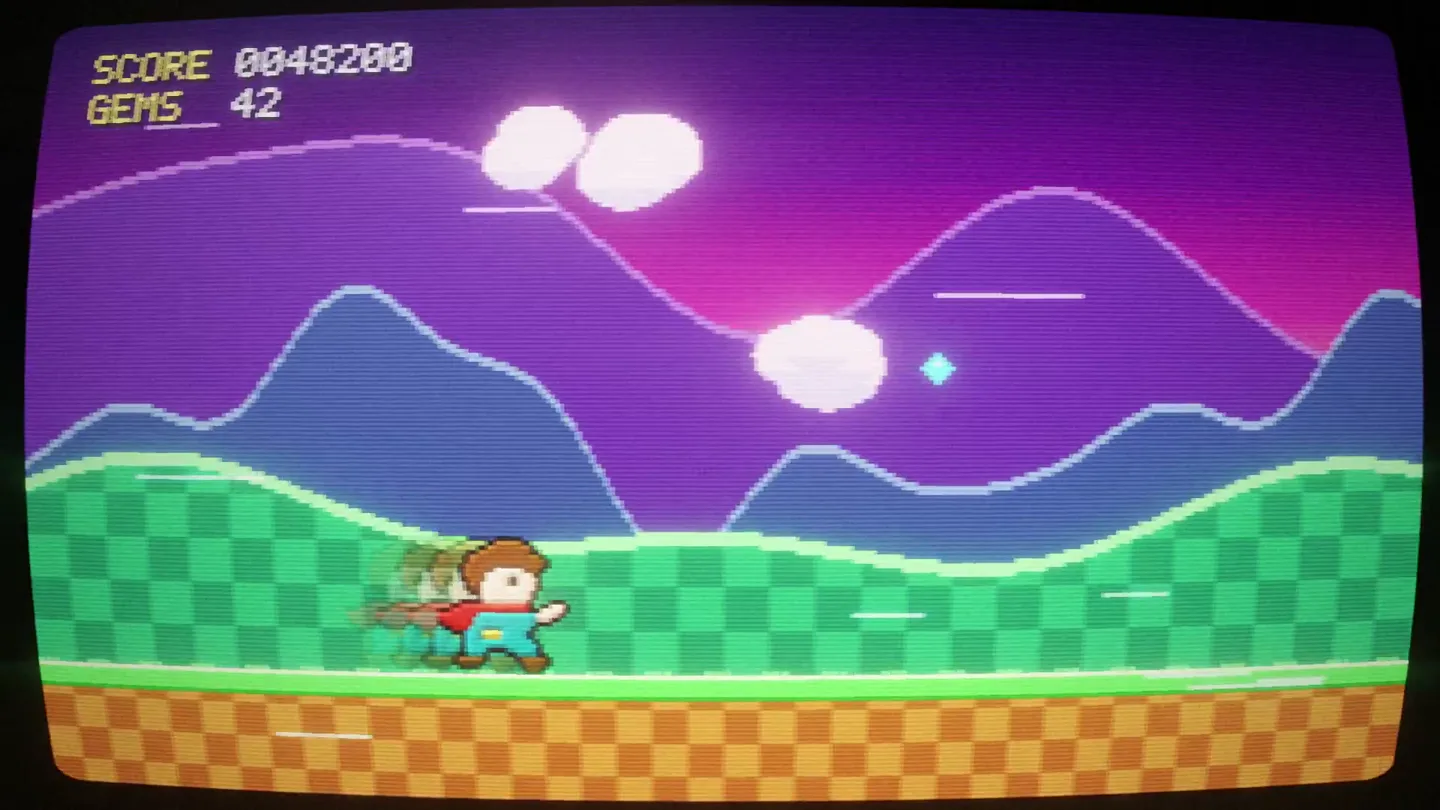
A history of video games, made by asking Claude in Cursor to make the video.
Scene-by-scene timeline & spoken transcript
The Hook
The Dawn of Gaming: Pixelated Beginnings
“(No spoken dialogue — Soft, ambient synth pad and arpeggiated synth melody, gradually building intensity.)”
- On screen
- 1958 TENNIS FOR TWO BROOKHAVEN NATIONAL LABORATORY IT BEGAN WITH A SINGLE POINT OF LIGHT 1962 SPACEWAR! MIT INSERT COIN 1978 THE GOLDEN AGE OF ARCADES 1985 1989 PLAY GOES POCKET 1993 THROUGH YOUR OWN EYES
- Camera
- Static shots of retro game screens, close-ups on CRT displays, slight camera push-ins on game elements.
- Motion
- Rapid cuts between historical game footage, CRT scanline effects, pixel art animation, subtle screen distortions.
Problem Agitation
Evolution of Worlds: From Pixels to Polygons
“(No spoken dialogue — High-energy transition with sub-bass drop and driving EDM beat, prominent synth lead, four-on-the-floor kick drum.)”
- On screen
- 1996 NEW DIMENSION 2004 MILLIONS OF PLAYERS. ONE WORLD. 2016 STEP INSIDE TOGETHER. IT WAS WHERE WE GREW UP.
- Camera
- Dynamic camera movements, including orbital shots around 3D environments, sweeping pans across landscapes, and first-person perspectives.
- Motion
- Glitch transitions, 3D camera animation, particle effects, volumetric lighting, retro-futuristic grid plane animations.
Product Reveal
The Future Unfolds: Infinite Worlds Await
“(No spoken dialogue — Dramatic riser and powerful sub-bass impact, leading into an orchestral synth section with a driving rhythm.)”
- On screen
- TODAY FROM A SINGLE PIXEL TO INFINITE WORLDS 2004 PRESS START A HISTORY OF VIDEO GAMES
- Camera
- Cinematic wide shots, tracking shots following characters, grand reveal shots of expansive landscapes, and abstract camera movements through digital space.
- Motion
- Seamless transitions between 2D pixel art and 3D rendered environments, character animation, dynamic text reveals, light flares, and lens effects.
Call to Action
Join the Journey: Press Start
“(No spoken dialogue — Track continues to build with layered synths and strong percussive elements, culminating in a final high-energy sweep and sub-bass impact, followed by a sustained synth pad outro.)”
- On screen
- PRESS START A HISTORY OF VIDEO GAMES
- Camera
- Zoom-out to reveal the full title, slow pan across the final scene, and a sustained hold on the call to action.
- Motion
- Subtle glow effects on text, particle dissipation, and a smooth fade to black.
Motion design primitives
Synthesizable in Remotion · key components of the history-of-gaming-data-viz template.
RetroCRTScanline
Simulates the visual characteristics of an old Cathode Ray Tube monitor, including scanlines, screen curvature, and subtle color fringing, often with a green monochrome or low-resolution pixel aesthetic.
+ Code construction recipe
Use a Remotion `Shader` component with a GLSL fragment shader to apply scanline patterns, barrel distortion, and chromatic aberration. Animate `opacity` and `scale` for screen transitions. Implement `spring` for subtle screen wobbles.
PixelToVoxelMorph
Transitions seamlessly from a 2D pixel art representation to a 3D voxel or low-poly model, maintaining the blocky aesthetic while adding depth and perspective.
+ Code construction recipe
Utilize `Canvas` or `Three.js` integration within Remotion. Create a 2D pixel grid and a corresponding 3D voxel model. Animate `scale` and `rotation` properties, interpolating between 2D and 3D states. Use `interpolate` for smooth color and position transitions.
GridHorizonWarp
A dynamic grid plane extends into a vanishing point, often with a retro-futuristic aesthetic, where the grid lines can warp, glow, and shift perspective.
+ Code construction recipe
Implement a `Canvas` component to draw the grid using `Path2D` or `WebGL`. Animate `perspective` and `rotation` properties of the camera. Apply `SVG filters` for glow effects on grid lines. Use `interpolate` with `ease-in-out` for smooth warping animations.
Style DNA & aesthetic system
Visual aesthetic
Typography
Motion
Special effects
Pacing & rhythm
Conceptual story rhythm
- 1
The Genesis
Purpose. Establish the humble beginnings of video games, evoking nostalgia and setting the historical context.
Execution. Rapid cuts of early monochrome and pixelated games (Tennis for Two, Spacewar, Pong, Space Invaders) with CRT effects and historical text overlays.
- 2
The Evolution
Purpose. Showcase the progression of gaming technology and experiences, from 2D to 3D, and the rise of online connectivity.
Execution. Transitions from 8-bit platformers to 16-bit racers, early 3D shooters, voxel landscapes, and global network visualizations, maintaining a retro-futuristic aesthetic.
- 3
The Emotional Core
Purpose. Connect the historical journey to the personal experience of players, highlighting the emotional impact and shared memories.
Execution. A scene of a child playing a retro game in a dimly lit room, followed by a cinematic reveal of a character overlooking a vast, evolving landscape, symbolizing growth and potential.
- 4
The Future Unveiled
Purpose. Position the product as the next step in this grand history, inviting viewers to participate in the future.
Execution. Grand, sweeping shots of an expansive, stylized world, culminating in a powerful call to action ('PRESS START') with glowing text and a sense of infinite possibilities.
Remix in Animatiq Studio
Master remix prompt · agent-ready
Sample remix
Objective
Launch a new data visualization platform called 'QuantumFlow'.How the recipe adapts
The video would start with monochrome data points on a simulated CRT screen, representing early data storage. It would then transition through pixelated bar charts and line graphs, evolving into low-poly 3D data models and eventually into a sleek, glowing grid horizon filled with interactive, real-time data streams. The 'PixelToVoxelMorph' primitive would adapt to 'DataPointTo3DModelMorph', showing how raw numbers transform into insightful visualizations. The 'GridHorizonWarp' would become 'InteractiveDataGrid', showcasing the platform's immersive capabilities. The final scene would feature 'VISUALIZE THE FUTURE' in a glowing Grotesque Sans-serif font, against a backdrop of a dynamic, interconnected data network.Remix blueprint · history-of-gaming-data-viz
Scene durations (4 scenes, 120s)
Key Remotion components
Related Creative AI & Video Product Launches
Explore all Creative AI & Video launches →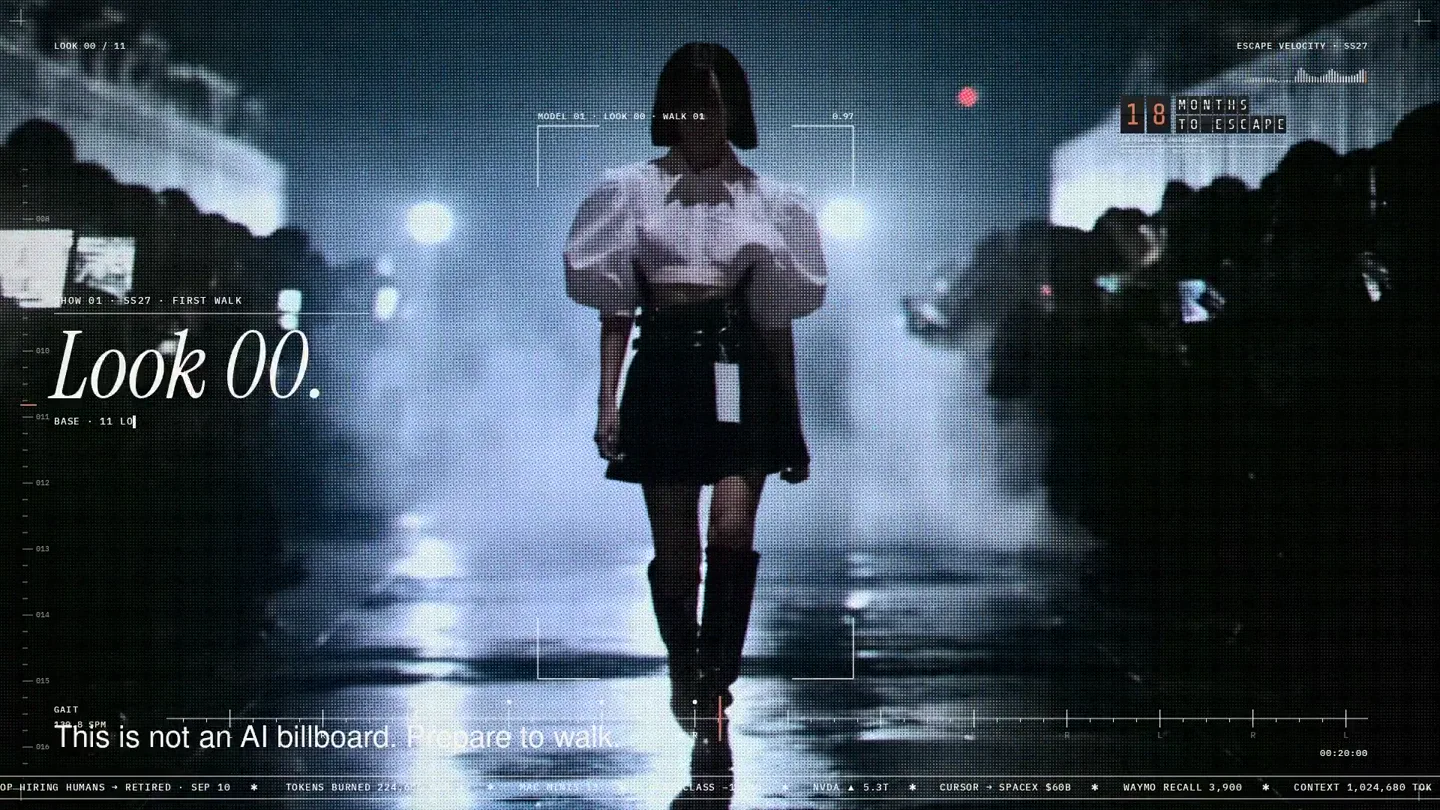
An overnight film made by giving Opus 5.5 Donald's prompt, Midjourney, and a moodboard. The piece is titled Look 00.
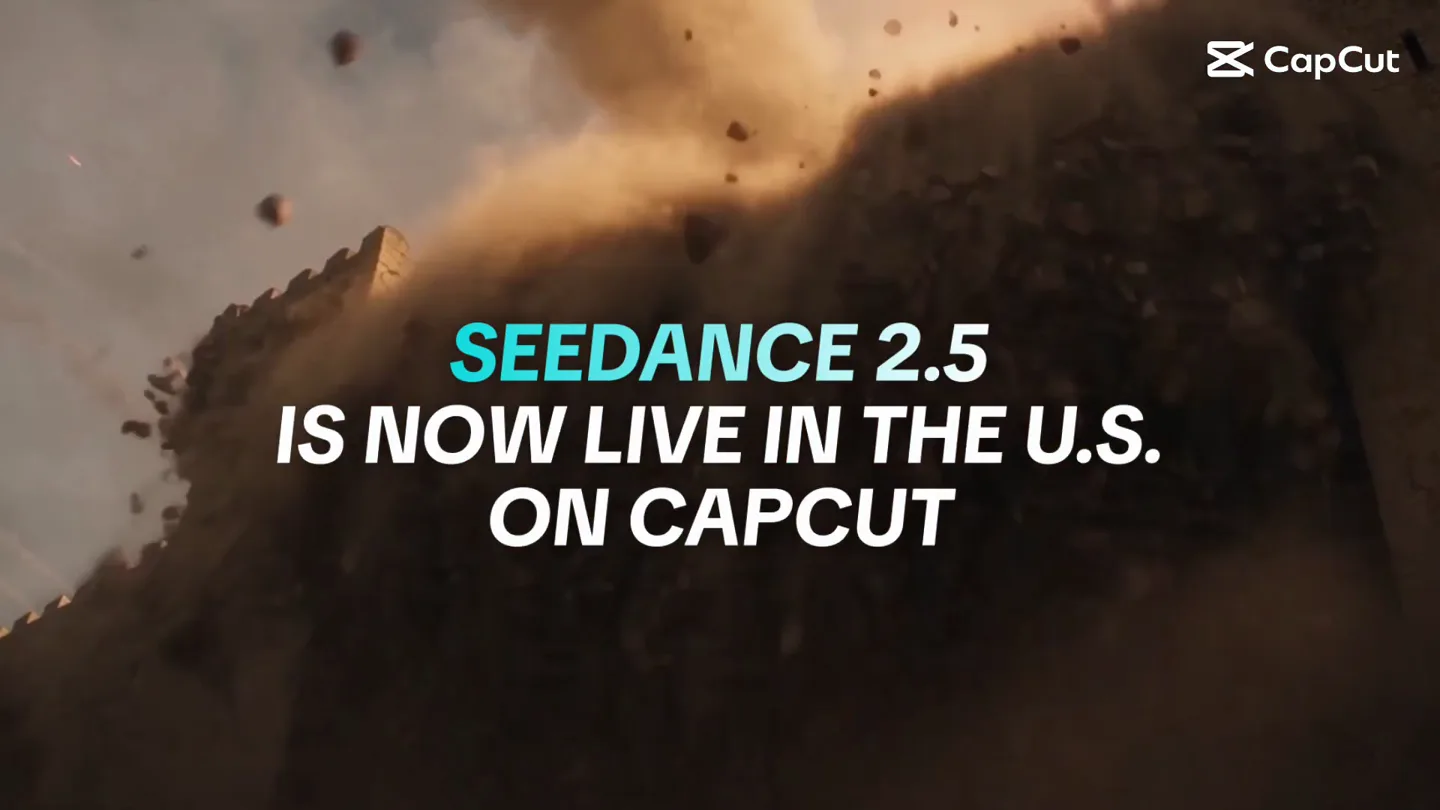
Dreamina Seedance 2.5, 30-second generations with up to 50 references.

The new Grok Bot icon animated entirely in code — every state, shape and expression morphs smoothly into the next. Made with Grok Build.