
Arthur Schiller · Launch Video Breakdown: Hook, Pacing & Motion Design
With scripting support inside @Scenery you can expose your entire spatial scene to an LLM as a function library. You talk, the scene responds. Doors open, color changes, engine fires. No menus, no controllers. Excited to see what new APIs Apple ships at #wwdc26 https://t.co/5HX9Thnhwy
Scene-by-scene timeline & spoken transcript
The Hook
Spatial AI Interaction with 3D Model
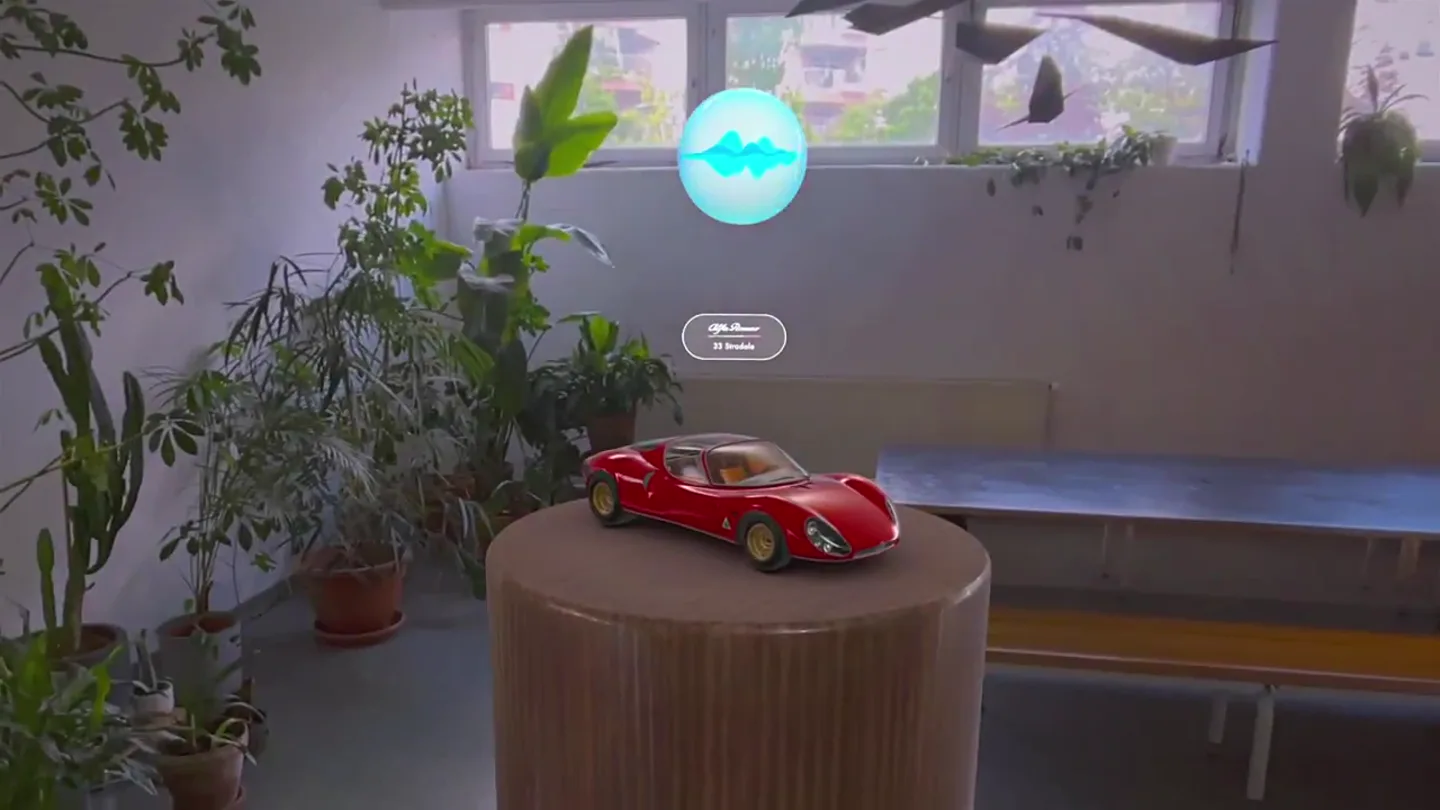
“This is the Alfa Romeo 33 Stradale. It's a beautiful car, isn't it?”
- On screen
- Alfa Romeo 33 Stradale
- Camera
- The camera slowly orbits a 3D model of a red Alfa Romeo 33 Stradale, placed on a wooden plinth in a room with plants. A glowing blue AI orb hovers above the car.
- Motion
- Smooth camera orbit, subtle object animation (car doors opening), and a glowing, pulsating AI orb indicating active listening.
Product Reveal
Dynamic Model Interaction and Color Change
“It is. Can you tell me more about it? What does it feel like to drive? It's a very light car, so it's very agile and responsive. It's a joy to drive. Can I see it in blue?”
- On screen
- Alfa Romeo 33 Stradale
- Camera
- The camera continues to orbit the car, which dynamically changes color from red to blue and back to red, with its doors opening and closing in response to dialogue.
- Motion
- Seamless 3D model material swap, animated object parts (doors), and a dynamic background transition from a real room to a blurred road scene and back.
Feature Teaser
Behind-the-Scenes Scripting Interface
“(No spoken dialogue — The music features pizzicato synths, sub-bass, and subtle 808s, creating a futuristic and sleek atmosphere. A significant riser builds at the end of this scene.)”
- On screen
- Finder File Edit View Go Window Help Fri 8. May 11:20 @Position Anchor AI Orb AI Orb Container Base @Position Anchor Portal Portal World Plinth Portal Entrance @Position Anchor Car Car Container 3D Model 3D Shadow @Position Anchor Video Alfa Romeo Spatial @Position Anchor Badge Mesh Object Events Q Filter... Scene Events ON EXPERIENCE START Experience Start Set Surroundings Effect Dark CUSTOM Open Car Doors Animate Object Model 3D Model ON EXPERIENCE Configur Run Script CUSTOM Show V Events Materials Post-FX #Variables Statistics All Scene Events Scene Event - Configure Scripts Run Script Name Actions Trigger On Experience Load Run Script Run Script Options Is Enabled this.ws.onerror = function(event) { console.error('WebSocket error:', event.error); }; this.ws.onClose = function() { console.log('33 Stradale assistant disconnected'); self.isConnected = false; self.isResponding = false; self.isPaused = false; self.cancelMicResume();
- Camera
- The camera zooms into a desktop interface, showcasing a 'Scenery' application with a 3D scene editor and a code editor. It highlights object events and scripting functions.
- Motion
- Rapid zoom and pan across a UI, highlighting specific code snippets and UI elements. The camera movement is precise and follows the narrative focus.
Call to Action
Brand Logo Reveal
“(No spoken dialogue — A high-energy audio transition with a significant riser culminates in a sub-bass drop/impact at 0:20.)”
- On screen
- (No on-screen text)
- Camera
- A quick cut to a clean, white background revealing the Scenery logo, followed by a black screen.
- Motion
- Fast cut, simple logo reveal with a subtle 3D effect, followed by an abrupt cut to black.
Motion design primitives
Synthesizable in Remotion · key components of the spatial-ai-product-reveal template.
SpatialOrbInteraction
A glowing, pulsating blue orb hovers in the scene, visually representing an active AI listener. Its size and intensity subtly change, indicating speech input and processing.
+ Code construction recipe
Implement a 3D sphere with a glowing material using Remotion's Three.js integration. Animate its scale and emissive intensity using `spring()` or `interpolate()` based on audio input levels or a simulated 'listening' state. Use a `ShaderMaterial` for the glow effect.
DynamicModelResponse
A 3D car model dynamically responds to voice commands by changing color, opening/closing doors, and transitioning between static and animated backgrounds.
+ Code construction recipe
Utilize Remotion's `Sequence` and `AbsoluteFill` for scene management. For the 3D model, use `Three.js` components. Implement `useCurrentFrame()` to trigger `gsap` or `spring()` animations for door movements and `interpolate()` for material color changes. Background transitions can be achieved with `CrossFade` or by swapping `Canvas` components.
CodeEditorZoomHighlight
The camera rapidly zooms into specific sections of a code editor interface, highlighting relevant lines of code or UI elements with a subtle glow or bounding box.
+ Code construction recipe
Render the UI as a static image or a series of `Img` components. Use `interpolate()` for camera position and zoom (`scale` and `translate` CSS properties). Overlay `AbsoluteFill` components with `opacity` and `border` animations to create highlight effects on specific code blocks or UI elements.
Style DNA & aesthetic system
Visual aesthetic
Typography
Motion
Special effects
Pacing & rhythm
Conceptual story rhythm
- 1
Interactive Introduction
Purpose. Immediately showcases the core product capability: voice-controlled spatial interaction with 3D objects.
Execution. A 3D car model in an AR-like setting responds to spoken commands, changing color and opening doors.
- 2
Dynamic Demonstration
Purpose. Expands on the interaction, demonstrating the fluidity and responsiveness of the spatial scene.
Execution. The car model transitions between real-world and abstract driving backgrounds, emphasizing its dynamic nature.
- 3
Technical Deep Dive
Purpose. Reveals the underlying technology and ease of scripting, appealing to developers and creators.
Execution. A rapid zoom into the 'Scenery' application UI, highlighting code and event configurations.
- 4
Brand Affirmation
Purpose. Concludes with a clear brand identity, leaving a lasting impression.
Execution. A clean, impactful logo reveal for 'Scenery' followed by a black screen.
Remix in Animatiq Studio
Master remix prompt · agent-ready
Sample remix
Objective
Demonstrate a smart thermostat that changes temperature and color based on voice commands and integrates with a home automation script.How the recipe adapts
The SpatialOrbInteraction primitive would be adapted for a hovering AI assistant near the thermostat. DynamicModelResponse would animate the thermostat's display changing temperature, its LED ring changing color, and a virtual room's lighting adjusting. The CodeEditorZoomHighlight would showcase the thermostat's API or a home automation script in a 'Scenery' like interface, demonstrating how users can customize its behavior.Remix blueprint · spatial-ai-product-reveal
Scene durations (5 scenes, 74.5s)
Key Remotion components
Related Creative Tools Product Launches
Explore all Creative Tools launches →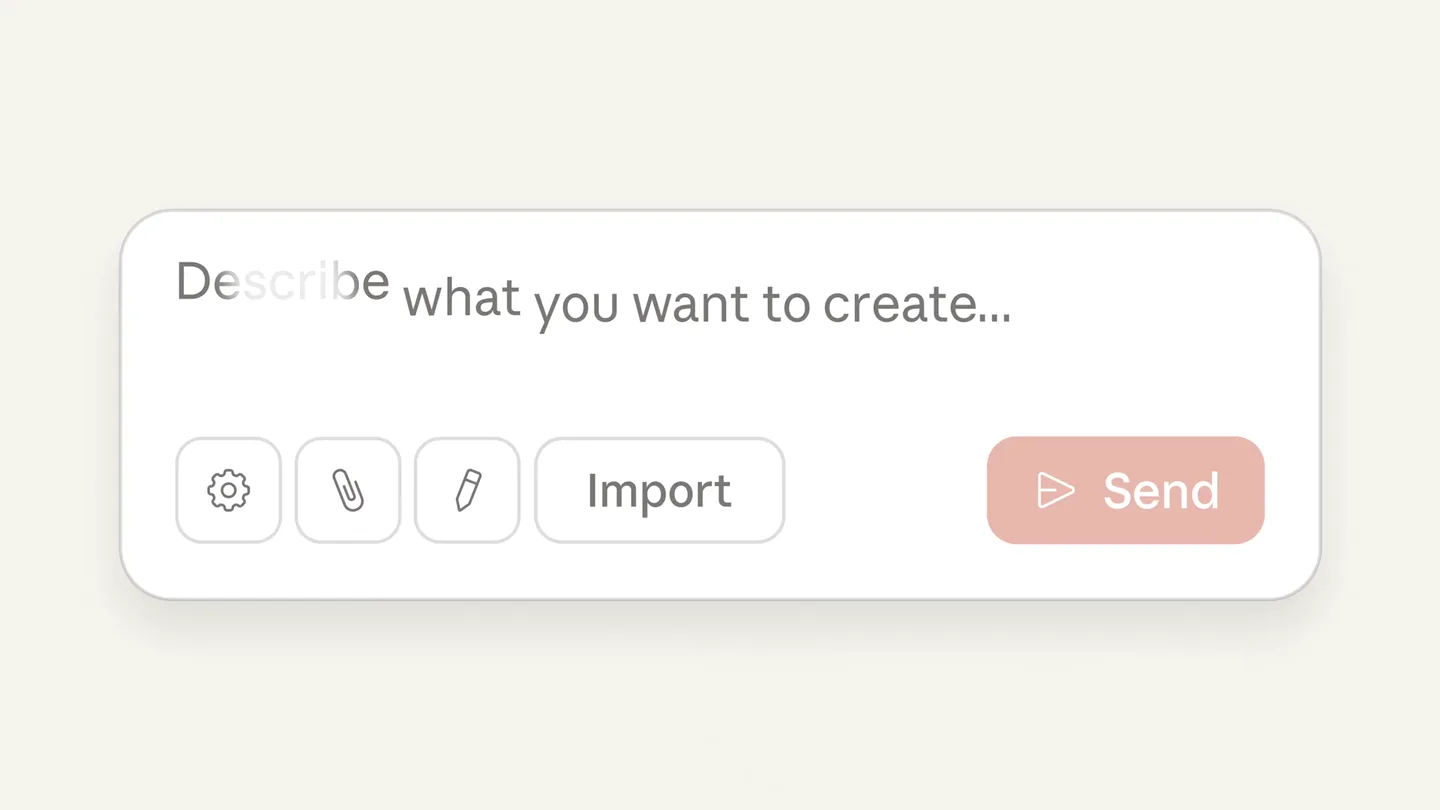
Anthropic Labs launches Claude Design, which turns conversation into prototypes, slides and one-pagers, powered by Claude Opus 4.7.
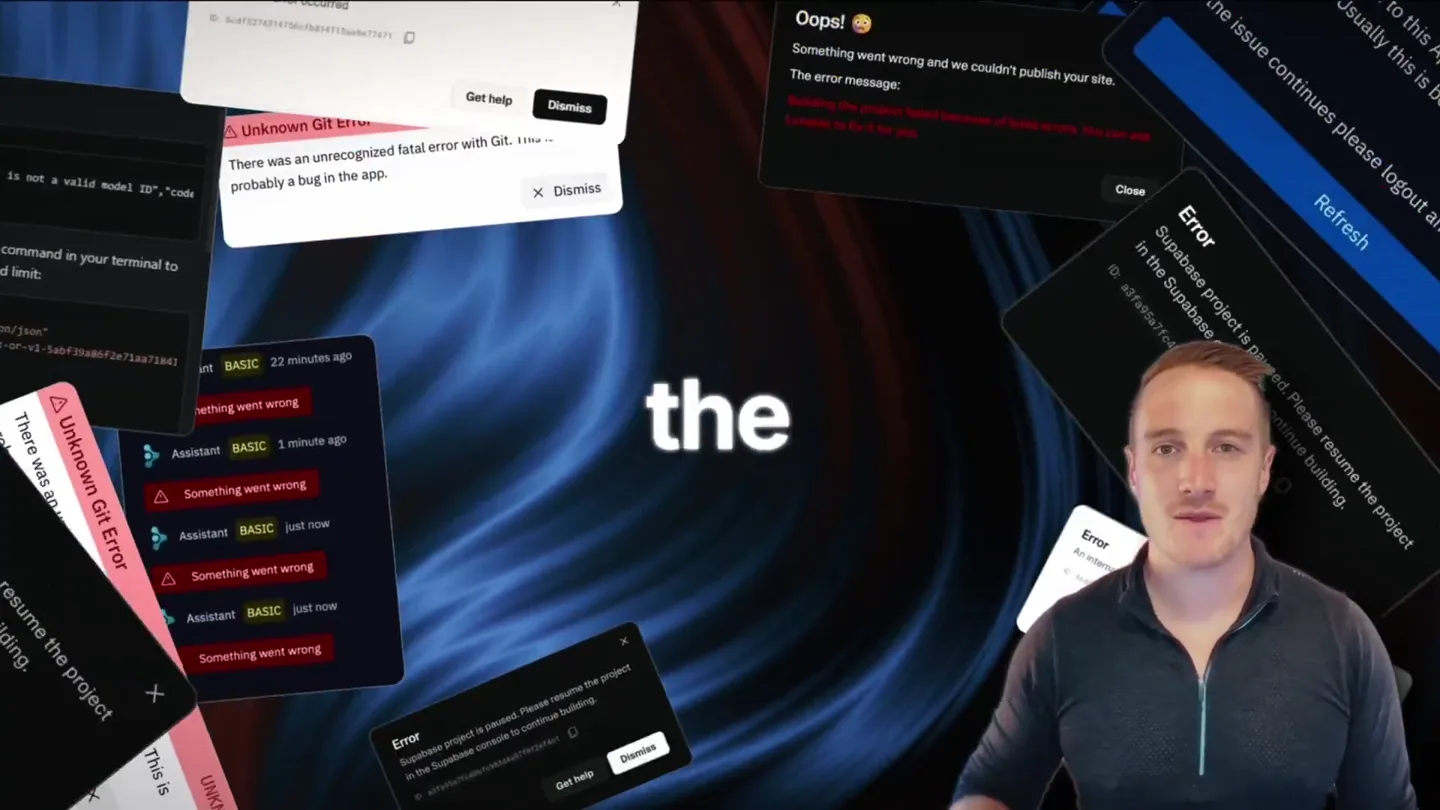
Bolt v2 pairs Claude Code and Codex agents with built-in hosting, database and storage so apps ship without setup.

Making life multiplanetary