
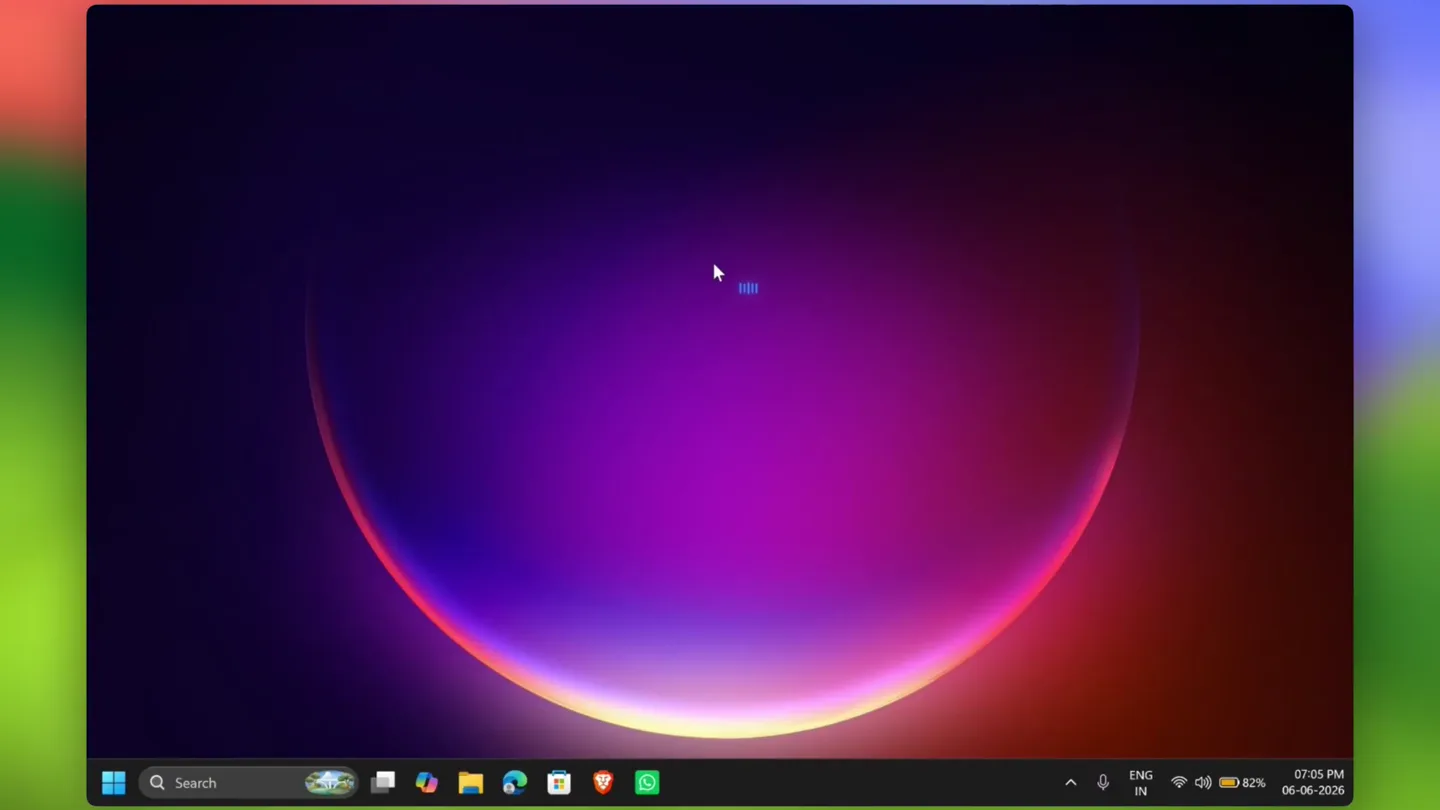
Robu · Launch Video Breakdown: Hook, Pacing & Motion Design
Windows users, i got your back Launching Snappy v2 with Snappy Realtime (demo below) also now Snappy can: Go invisible Point at multiple things Integrate with all your apps Automate daily workflows try it at https://t.co/ZkWWeI9e9y https://t.co/jBaWPJHBSy
Scene-by-scene timeline & spoken transcript
The Hook
Instant JavaScript Tutorial Search
“Hey Snappy, find me some JavaScript tutorials.”
- On screen
- youtube.com/results?search_query=javascript+tutorials JavaScript tutorials All Unwatched Videos Recently uploaded Live Filters JavaScript Full Course - Beginner to Pro 8.7M views • 2 years ago SuperSimpleDev Get a certificate for this course: https://courses.supersimpledev.com/courses/javascript or Frontend Bundle (React... Lecture 27 chapters Intro 1 JavaScript Basics | 2 Numbers and Math | 3 Strings | 4 HTML, CSS... Learning JavaScript for the First Time HTML and CSS Dev in Details Like and comment if this was you when you first started learning JavaScript Video credit: Zawierlowe on tiktok #shorts YouTube Home Shorts Subscriptions @ 8bit Binks69 @ GS up vlogs A NEW KNOW ? Adamx Adi 4 u Aeivy TV Show more You Your channel History Playlists Watch later Search ENG IN 82% 07:05 PM 06-06-2026
- Camera
- Static, full-screen desktop capture, focusing on the browser window.
- Motion
- Real-time screen recording with a subtle loading animation (blue bars) indicating AI processing.
Product Reveal
Seamless Spotify Integration & Music Search
“Open Spotify. Search for rock music.”
- On screen
- What do you want to play? Your Library Playlists Podcasts Gaming playlist - Robu pov: you're in love playlist - Made for Robu The Desi Crime Podcast Podcast - Desi Studios Tim playlist - Tim This playlist is not ava... #1 Gaming Playlist playlist - Felix K METAMORPHOSIS INTERWORLD All Music Podcasts Made For Robu Daily Mix DHARIA, Otilia, Mike Diamondz and more Your top mixes Ritmix Hip Hop Mix Rock Show all METAMORPHOSIS INTERWORLD About the artist rock All Songs Albums Playlists Genres & Moods Artists Podcasts & Sh Rock Genre Jump in: Rock playlists ALLNEW ROCK All New Rock By Spotify MARROW By Spotify AT NOW By Spotify the new alt By Spotify TODAY'S PUN By Spotify Rockstar playlist - Felix K ENG IN 82% 07:06 PM 06-06-2026
- Camera
- Static, full-screen desktop capture, transitioning from browser to Spotify application.
- Motion
- Application switching and in-app search demonstrated via real-time screen recording, with the same loading animation.
Feature Teaser
Quick Fact Retrieval & Email Check
“How many goals does Cristiano Ronaldo have? Check for new emails.”
- On screen
- Cristiano Ronaldo has scored over 870 official senior career goals for club and country. rock All Songs Albums Playlists Genres & Moods Artists Podcasts & Sh Rock Genre Jump in: Rock playlists ALLNEW ROCK All New Rock By Spotify MARROW By Spotify AT NOW By Spotify the new alt By Spotify TODAY'S PUN By Spotify Rockstar playlist - Felix K ENG IN 81% 07:06 PM 06-06-2026
- Camera
- Static, full-screen desktop capture, showing a pop-up notification and then a transition to an email client.
- Motion
- Real-time screen recording, showcasing a system-level notification for information retrieval and application launch.
Feature Teaser
Email Management & Calendar Integration
“Delete the first email. Create a new event for tomorrow at 10 AM, 'Team Sync'.”
- On screen
- (No on-screen text)
- Camera
- Static, full-screen desktop capture, demonstrating email deletion and calendar event creation.
- Motion
- Real-time screen recording, highlighting direct manipulation of applications through voice commands.
Call to Action
Advanced Automation & Product Features
“Go invisible. Point at multiple things. Integrate with all your apps. Automate daily workflows. Try it at https://t.co/ZkWl9e9y”
- On screen
- Snappy v2 Snappy Realtime Go invisible Point at multiple things Integrate with all your apps Automate daily workflows try it at https://t.co/ZkWl9e9y
- Camera
- Static, full-screen desktop capture, with text overlays appearing dynamically.
- Motion
- Text reveals with a subtle fade-in and scale-up, combined with real-time screen recording demonstrating the 'invisible' mode and multi-point functionality.
Motion design primitives
Synthesizable in Remotion · key components of the ai-desktop-assistant-launch template.
RealtimeAppSwitch
Seamlessly transitions between different applications on a desktop environment, mimicking a user's natural workflow. A subtle loading indicator appears during the transition.
+ Code construction recipe
Utilize `Sequence` and `AbsoluteFill` components. Each application screen is a separate `Composition` rendered as a `Still` or `Video` component. Use `spring` for a quick, responsive fade-out/fade-in effect between application states. The loading indicator can be an SVG animated with `interpolate` for its width.
VoiceCommandTextOverlay
Displays spoken commands as on-screen text, often appearing as a small, transient bubble or a direct text input within an application.
+ Code construction recipe
Implement a `Text` component with `AbsoluteFill` for positioning. Animate its `opacity` and `scale` using `spring` for a natural pop-in/pop-out effect. For the bubble effect, use a `div` with `borderRadius` and `backgroundColor` behind the text, also animated with `spring`.
FeatureBulletReveal
Introduces new product features as bullet points, fading in and slightly scaling up sequentially or all at once.
+ Code construction recipe
Use a `Sequence` of `Text` components. Each text item's `opacity` and `transform` (e.g., `translateY` or `scale`) should be animated using `interpolate` with an `easeOut` curve, staggered by a few frames for a sequential reveal. Consider a subtle `blur` effect that resolves as the text appears.
Style DNA & aesthetic system
Visual aesthetic
Typography
Motion
Special effects
Pacing & rhythm
Conceptual story rhythm
- 1
Command & Response
Purpose. To establish the core interaction model: user speaks, AI acts.
Execution. User voice command followed by immediate on-screen application action and AI response text/notification.
- 2
Multi-App Versatility
Purpose. To showcase the AI's ability to integrate and operate across various applications.
Execution. Rapid switching between different applications (browser, Spotify, email, calendar) with seamless execution of commands.
- 3
Product Feature Spotlight
Purpose. To highlight specific, unique capabilities of Snappy v2.
Execution. On-screen text overlays revealing features like 'Go invisible' and 'Point at multiple things', accompanied by visual demonstrations.
- 4
Call to Action & Automation
Purpose. To encourage user engagement and emphasize the product's value in automating daily tasks.
Execution. Final screen with product name, key benefits, and a clear URL, reinforcing the automation aspect.
Remix in Animatiq Studio
Master remix prompt · agent-ready
Sample remix
Objective
Launch an AI-powered design assistant, CanvasFlow, that automates design tasks and integrates with popular design tools.How the recipe adapts
The RealtimeAppSwitch primitive will demonstrate CanvasFlow opening Figma and Photoshop. VoiceCommandTextOverlay will show commands like 'Generate three layout options for a landing page' or 'Export all assets as SVG'. FeatureBulletReveal will highlight capabilities such as 'AI-driven mood boards' and 'One-click design system updates'. The overall aesthetic will retain the clean, functional screen-capture feel, but with CanvasFlow's brand colors and UI elements.Remix blueprint · ai-desktop-assistant-launch
Scene durations (5 scenes, 65.3s)
Key Remotion components
Related AI Agents Product Launches
Explore all AI Agents launches →
To ensure that artificial general intelligence benefits all of humanity
Gopuff introduces Go, an AI shopping assistant built with SpaceXAI: say what you need and the order is placed.

Iliad (Troy) trailer made by Grok Imagine 1.5, which was just released