
Adventure AI · Launch Video Breakdown: Hook, Pacing & Motion Design
Layers Studio in Adventure AI turns a generated image into a layered PSD you can move, recompose, and finish in Photoshop.
Scene-by-scene timeline & spoken transcript
The Hook
Brand & Product Introduction
“(No spoken dialogue — Ambient electronic score with pizzicato synths and sub-bass establishes a rhythmic pulse.)”
- On screen
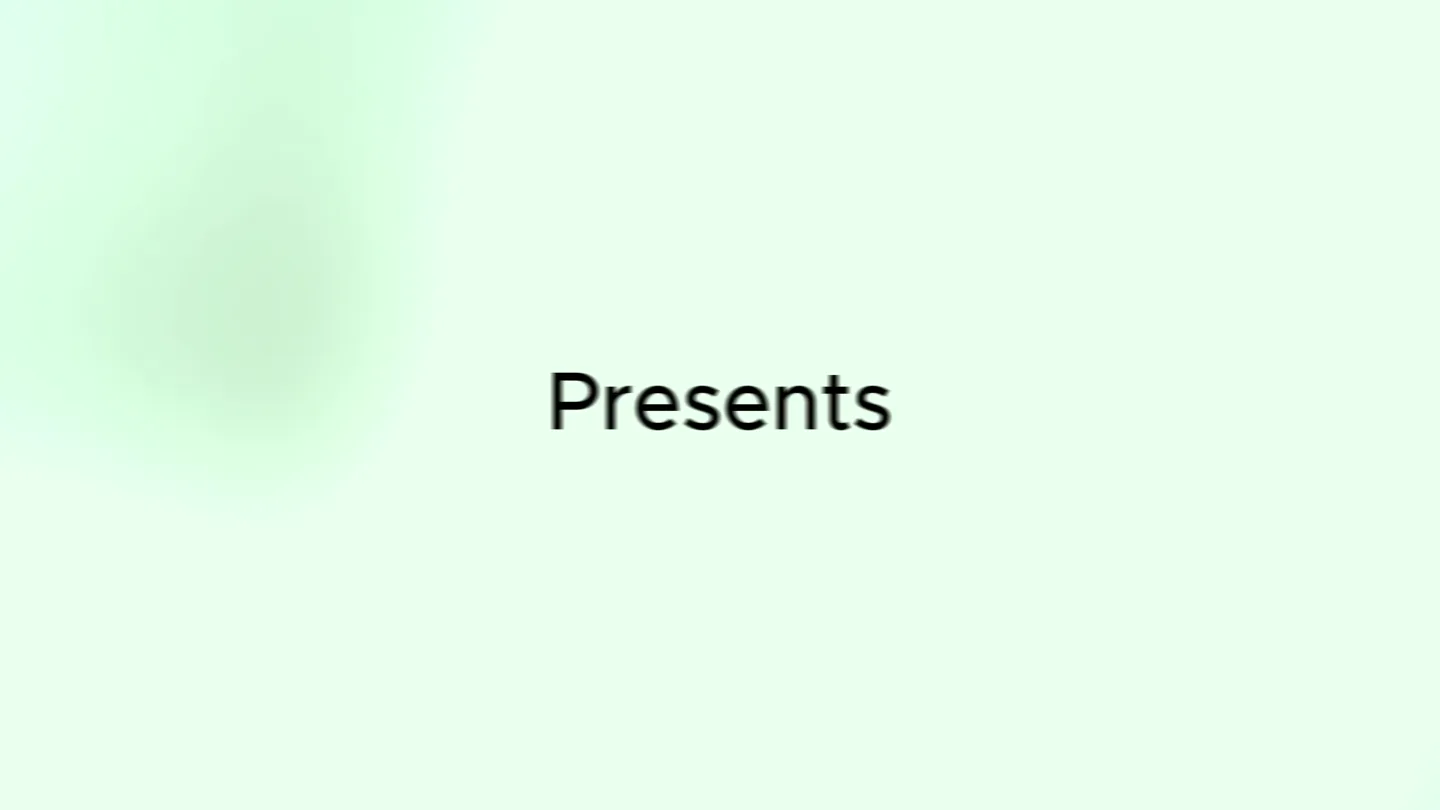
- Adventure AI Presents Layers Studio
- Camera
- Static, centered text on a subtly animated gradient background.
- Motion
- Text fades in and out with a soft, smooth transition. Background gradient shifts color and intensity.
Product Reveal
AI-Generated Image to Layered PSD
“(No spoken dialogue — The rhythmic pulse continues, building subtle energy.)”
- On screen
- CORAL FRUIT BLEND PREMIUM BEATLY 4 fl oz (350ml) LAYERS Export your work Choose a format to download PSD Photoshop file Keep all editable layers PNG Flat image Download as a PNG
- Camera
- Close-up on a digital image, then a slow zoom out to reveal a UI, followed by a pan and zoom on specific UI elements.
- Motion
- A digital image is shown with bounding boxes indicating object detection. The image seamlessly transitions into a UI with a 'Layers' panel. Individual layers are highlighted and toggled on/off, demonstrating their independent manipulation. A smooth UI animation shows the export options.
Feature Teaser
Photoshop Integration & Editing
“(No spoken dialogue — The electronic score maintains its driving rhythm.)”
- On screen
- Ps File Edit Image Layer Type Select Filter View Plugins Window Help Pro Editor Auto-Select Layer Show Transform Controls Properties Channels Paths Layers Normal Opacity: 100% Lock: 888 Fill: 100% Transforms X: 612 px Y: 529 px W: 1862 px H: 1324 px 0.00° Align and Distribute Align: Quick Actions Remove Background Select Subject View More Brushes History Size: Search Brushes Texture brushes Flat texture from ahmed Sample Brush-10 from ahmed Oil-6 from ahmed Oil texture from ahmed Mixer brush from ahmed Round Bristle Mixer from ahmed 15th-2024 Prompt to edit Remove background Adjust colors CORAL fruit blend beverage bottle Floating water droplets Top left blueberry Left middle blueberry Left middle peach slice Right side blueberry Right side peach slice Top right watermelon slice Top right blueberry Top right peach slice Left lower blueberry Top left mango half Right side mango half Left middle watermelon... Bottom left peach slice
- Camera
- Static shot of the Photoshop interface, with a subtle zoom on the image.
- Motion
- The generated PSD is opened directly in Photoshop. A bounding box appears around the main product, demonstrating its selectability and editability within the professional software. The layers panel in Photoshop mirrors the layers from the previous UI.
Call to Action
Brand Identity & Website
“(No spoken dialogue — The audio track builds energy with a high-energy audio transition/riser at [0:40], culminating in a sharp, impactful sound at [0:41] followed by silence.)”
- On screen
- adventuregen.ai
- Camera
- Static, centered logo and website URL.
- Motion
- The company logo appears with a clean fade-in. The website URL then fades in below the logo. The overall motion is minimal, allowing the impactful audio transition to drive the final moments.
Motion design primitives
Synthesizable in Remotion · key components of the ai-creative-tool-launch template.
LayeredObjectReveal
Individual elements within a composite image are highlighted and then sequentially hidden or revealed, demonstrating their independent layer status. This is often accompanied by a corresponding highlight in a UI layer panel.
+ Code construction recipe
Use `Sequence` and `AbsoluteFill` for the base image. For each layer, render a `Still` component with `AbsoluteFill` and `z-index`. Control visibility with `spring` or `interpolate` on `opacity` and `scale` based on `currentFrame` and `delay` for sequential reveals. Use `Path` or `Rect` components with `stroke` and `fill` for bounding box highlights, animating `stroke-dashoffset` for a drawing effect.
UIDraggableHighlight
A bounding box appears around an object in an image, indicating it's selectable. This box can then be subtly animated to show a 'drag' or 'resize' interaction, often with pixel readouts.
+ Code construction recipe
Render a `Rect` component with `stroke` and `fill='transparent'` for the bounding box. Animate `x`, `y`, `width`, `height` properties using `spring` or `interpolate` to simulate selection and manipulation. Overlay `Text` components for pixel dimensions, animating their `opacity` and `translateY`.
SeamlessAppTransition
A digital image or UI seamlessly transitions into another application's interface (e.g., a custom tool to Photoshop), maintaining visual context and elements.
+ Code construction recipe
Pre-render or use `Img` components for both the source UI and the target application screenshot. Use `AbsoluteFill` and `z-index` to layer them. Animate `opacity` and `scale` of the source UI to fade out while the target application fades in. Crucially, align common elements (like the image itself or layer panels) using `transform` and `clipPath` to create the illusion of a single continuous environment.
Style DNA & aesthetic system
Visual aesthetic
Typography
Motion
Special effects
Pacing & rhythm
Conceptual story rhythm
- 1
The Setup
Purpose. Introduce the brand and the core problem/solution in a concise, intriguing way.
Execution. Minimalist text animations on a gradient background, setting a clean, modern tone.
- 2
The Demonstration
Purpose. Visually explain the product's core functionality: converting a flat image into editable layers.
Execution. Detailed UI walkthrough, highlighting layer detection, selection, and manipulation within the custom application.
- 3
The Integration
Purpose. Showcase the product's compatibility and workflow with industry-standard tools.
Execution. Seamless transition into Photoshop, demonstrating the PSD export and continued editing capabilities.
- 4
The Resolution
Purpose. Provide a clear call to action and reinforce brand identity.
Execution. Clean logo reveal and website URL, accompanied by a high-energy audio climax.
Remix in Animatiq Studio
Master remix prompt · agent-ready
Sample remix
Objective
Launch a new AI-powered video editing tool called 'SceneSplitter' that automatically separates a single video clip into multiple editable layers (foreground, background, specific objects).How the recipe adapts
The LayeredObjectReveal primitive would be adapted to show a video frame being analyzed, with bounding boxes appearing around detected objects, and then each object fading in/out as a separate 'layer' in a custom UI. The UIDraggableHighlight primitive would demonstrate selecting and moving a foreground object within the video frame. The SeamlessAppTransition would show the layered video project exporting and opening directly in a professional NLE like Premiere Pro, with each layer as a separate track.Remix blueprint · ai-creative-tool-launch
Scene durations (4 scenes, 45s)
Key Remotion components
Related Creative Tools Product Launches
Explore all Creative Tools launches →
Anthropic Labs launches Claude Design, which turns conversation into prototypes, slides and one-pagers, powered by Claude Opus 4.7.
A vibe design partner with an AI-native canvas for turning ideas into UI.

We heard you wanted to use Codex rate limit resets on your own time. Starting today, we’re rolling out the ability to save rate limit resets to use later. We’re starting Go, Plus, Pro, and Business