
Anatoli Kopadze · Launch Video Breakdown: Hook, Pacing & Motion Design
the engineer who built Claude Code just dropped a 28-minute video on how to write prompts that actually work I've seen $300 courses that don't cover what he shows in the first 10 minutes CLAUDE.md…
Scene-by-scene timeline & spoken transcript
The Hook
Installation & Initial Setup
“(No spoken dialogue — Driving electronic rhythm and ambient sound design.)”
- On screen
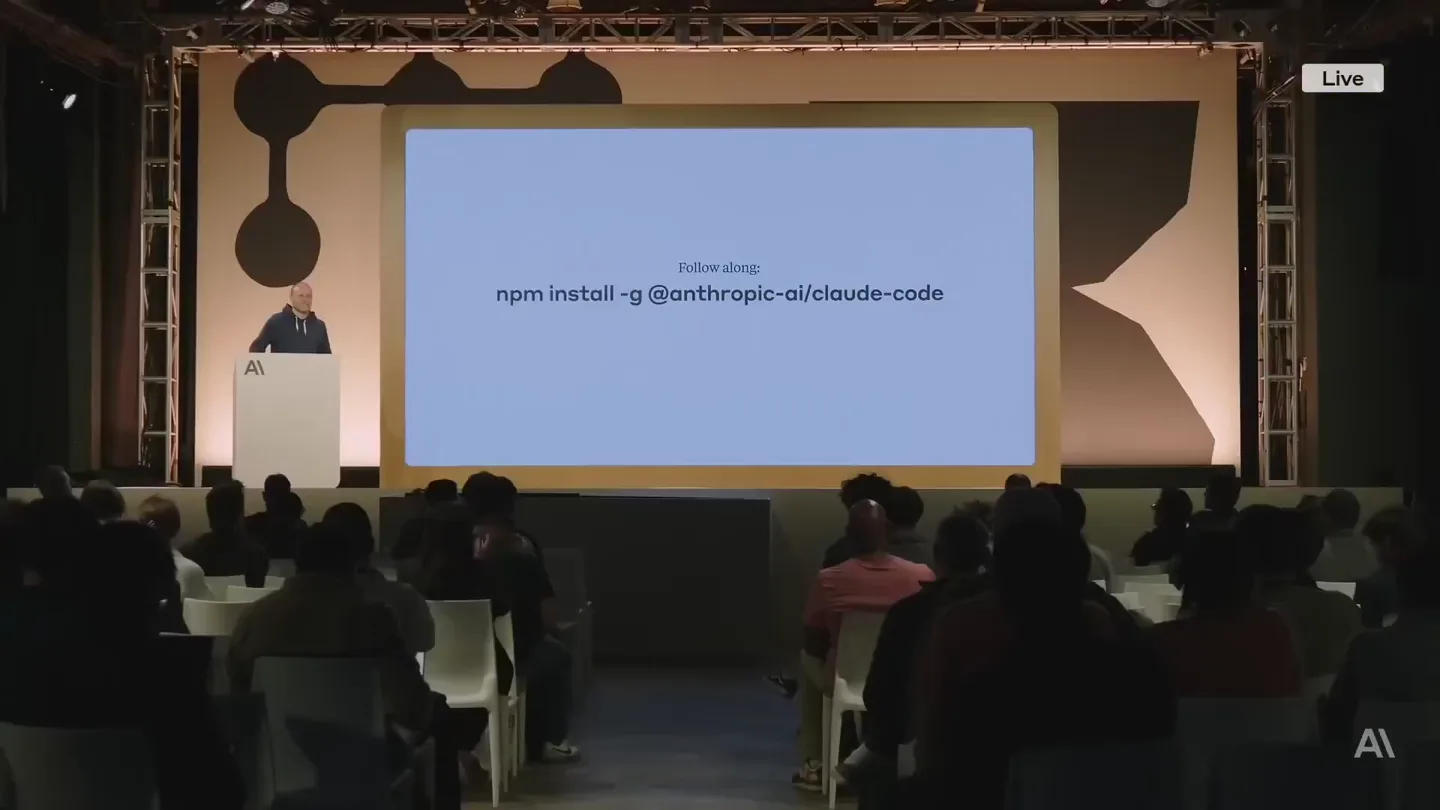
- Follow along: npm install -g @anthropic-ai/claude-code
- Camera
- Wide shot of presenter on stage with a large screen displaying code. Camera slowly zooms in.
- Motion
- Subtle zoom, static text overlay.
Product Reveal
Claude Code Core Functionality
“um but also because it can do so much asking questions to your codebase something that I do a lot also a little bit more what can be one shot it”
- On screen
- Use Claude Code to answer questions about your codebase 1 The easiest way for new users to start with Code 2 Zero setup needed 3 Your data stays local Example prompts: > How is @RoutingController.py used? > How do I make a new @app/services/ValidationTemplateFactory? > Why does recoverFromException take so many arguments? Look through git history to answer > Why did we fix issue #18383 by adding the if/else in @src/login.ts API? > In which version did we release the new @api/ext/PreHooks.php API? > Look at PR #9383, then carefully verify which app versions were impacted > What did I ship last week? Code w/ Claude
- Camera
- Alternates between medium shot of presenter and wide shot of presenter with screen. Screen content changes dynamically.
- Motion
- Dynamic text reveal, cursor animation, content slide transitions.
Feature Teaser
Advanced Workflows & Context Management
“but Quantum d is pulled in automatically so maybe I have an enterprise policy I'll usually just switch into auto accept mode if you hadn't played around with this so I'll have usually like one quad running at a time”
- On screen
- Common workflows Explore > plan > confirm > code > commit > Figure out the root cause for issue #983, then propose a few fixes. Let me choose an approach before you code. ultrathink Write tests > commit > code > iterate > commit > Write tests for @utils/markdown.ts to make sure links render properly (note the tests won't pass yet, since links aren't yet implemented). Then commit. Then update the code to make the tests pass. Write code > screenshot result > iterate > Implement [mock.png]. Then screentshot it with Puppeteen and iterate till it looks like the mock. Give Claude more context Auto-add common bash commands, files, and style conventions to every session: * </enterprise root>/CLAUDE.md Shared across all projects * ~/.claude/CLAUDE.md Shared across all projects * project-root/ * CLAUDE.md Checked in * CLAUDE.local.md Not checked in (Shortcut: type #) Give Claude more context Pull in context on demand: * ~/.claude/commands/foo.md Type /user:foo * project-root/ * .claude/commands/foo.md Type /project:foo * a/ * commands/foo.md Type @a * CLAUDE.md Pulled in on demand * foo.py Type @a/foo.py claude commands create-release-pr.md fix-github-issue.md get-feedback.md label-github-issues.md lint.md settings.json settings.local.json Share permissions, memory, and MCP servers with your team Enterprise policy Global (just me) Project (checked in) Project (just me) Welcome to Claude Code! Memory Files L managed: /Library/Application Support/ClaudeCode/CLAUDE.md L user: ~/.claude/CLAUDE.md L project: CLAUDE.md L vendor/CLAUDE.md Learn more: https://docs.anthropic.com/en/docs/claude-code/memory Select memory to edit: > Project memory Checked in at ./CLAUDE.md > Project memory (local) Gitignored in ./CLAUDE.local.md > User memory Saved in ~/.claude/CLAUDE.md > [ANT-ONLY] Ultra memory Critical instructions in ~/.claude/ULTRACLAUDE.md 38 memories in ./CLAUDE.md Interlude: Keybindings Key combos for common tasks: 1 Shift+tab to auto-accept edits 2 # to create a memory 3 ! to enter bash mode 4 @ to add a file/folder to context 5 Esc to cancel 6 Double-esc to jump back in history, --resume to resume 7 ctrl-r for verbose output 8 /vibe Claude Code SDK Use the SDK for programmatic, low-level access to Claude Code Useful for CLI and non-interactive contexts, automation, and building block for interactive apps Currently supports CLI (TypeScript) & Python SDKs coming soon! $ claude -c \ "what did I do this week?" \ --allowed-foils $(git log -r)\ --output-format json Your agentic application Claude Code SDK Anthropic, Bedrock, or Vertex API Claude models Interlude: Multi-claude There are many ways to run more claudes in parallel: 1 Use multiple checkouts in separate terminal tabs 2 Use one checkout with git worktrees 3 SSH + TMUX 4 Github Actions, launch jobs in parallel
- Camera
- Dynamic cuts between presenter and screen. Screen content features various code snippets, diagrams, and lists.
- Motion
- Rapid content changes, list item reveals, diagram animations, subtle camera pans.
Call to Action
Q&A and Future Outlook
“and it can change system state in unexpected and some people use VS code”
- On screen
- Q+A
- Camera
- Close-up on presenter, then wider shot of presenter on stage with a 'Q+A' overlay.
- Motion
- Static text overlay, direct address to camera.
Motion design primitives
Synthesizable in Remotion · key components of the developer-tool-launch-presentation template.
DynamicCodeSlide
A large rectangular screen displays code or text content that slides in from the side or fades in, often with specific lines or sections highlighted or revealed sequentially.
+ Code construction recipe
Utilize Remotion's <Sequence> and <AbsoluteFill> components. Animate `transform: translateX` or `opacity` properties with `spring()` or `interpolate()` for smooth transitions. Use conditional rendering or array mapping for sequential text reveals.
PresenterFocusCut
Seamless transitions between a wide shot of the presenter and screen, and a medium close-up of the presenter, maintaining visual continuity.
+ Code construction recipe
Implement `AbsoluteFill` for the stage background. Use `Img` or `Video` components for presenter footage. Control `scale` and `position` with `interpolate()` based on `frame` to simulate camera zooms and cuts. Overlay screen content with `AbsoluteFill` and `z-index`.
InteractiveDiagramReveal
Complex diagrams, flowcharts, or lists appear on screen, with elements animating into view or changing state to illustrate concepts.
+ Code construction recipe
Leverage SVG for vector graphics and animate `stroke-dasharray`, `stroke-dashoffset`, `opacity`, and `transform` properties. Use `spring()` for bouncy reveals of individual list items or diagram nodes. Conditional rendering based on `frame` can control element visibility.
Style DNA & aesthetic system
Visual aesthetic
Typography
Motion
Special effects
Pacing & rhythm
Conceptual story rhythm
- 1
The Setup
Purpose. Introduce the tool and its immediate utility, setting the stage for a practical demonstration.
Execution. Initial screen showing installation command, followed by a quick overview of Claude Code's core benefits and example prompts.
- 2
Deep Dive into Features
Purpose. Explain advanced functionalities and how Claude Code integrates into developer workflows.
Execution. Detailed slides on common workflows, context management, memory, and keybindings, with the presenter elaborating on each point.
- 3
Technical Underpinnings & SDK
Purpose. Provide insight into the underlying architecture and programmatic access, appealing to advanced users.
Execution. Screens displaying the Claude Code SDK, multi-Claude setups, and enterprise policy configurations, often with diagrams.
- 4
Engagement & Outlook
Purpose. Conclude with an interactive segment and a forward-looking perspective.
Execution. Transition to a Q&A segment, with the presenter directly addressing the audience, maintaining a conversational tone.
Remix in Animatiq Studio
Master remix prompt · agent-ready
Sample remix
Objective
Launch a new AI-powered debugging assistant called 'BugSquash'.How the recipe adapts
The 'DynamicCodeSlide' primitive will be used to showcase BugSquash's real-time error detection and suggested fixes within a code editor interface. 'PresenterFocusCut' will transition between the founder explaining the AI's logic and on-screen demonstrations of BugSquash in action. 'InteractiveDiagramReveal' will illustrate the AI's learning process and integration points with popular IDEs. The color palette will shift to a slightly cooler, more analytical blue and green scheme, while maintaining the clean typography and smooth transitions to convey precision and efficiency.Remix blueprint · developer-tool-launch-presentation
Scene durations (4 scenes, 1637.5s)
Key Remotion components
Related Developer Tools Product Launches
Explore all Developer Tools launches →
xAI opens voice cloning on its API: build a custom voice in about two minutes or pick from 80+ voices in 28 languages.
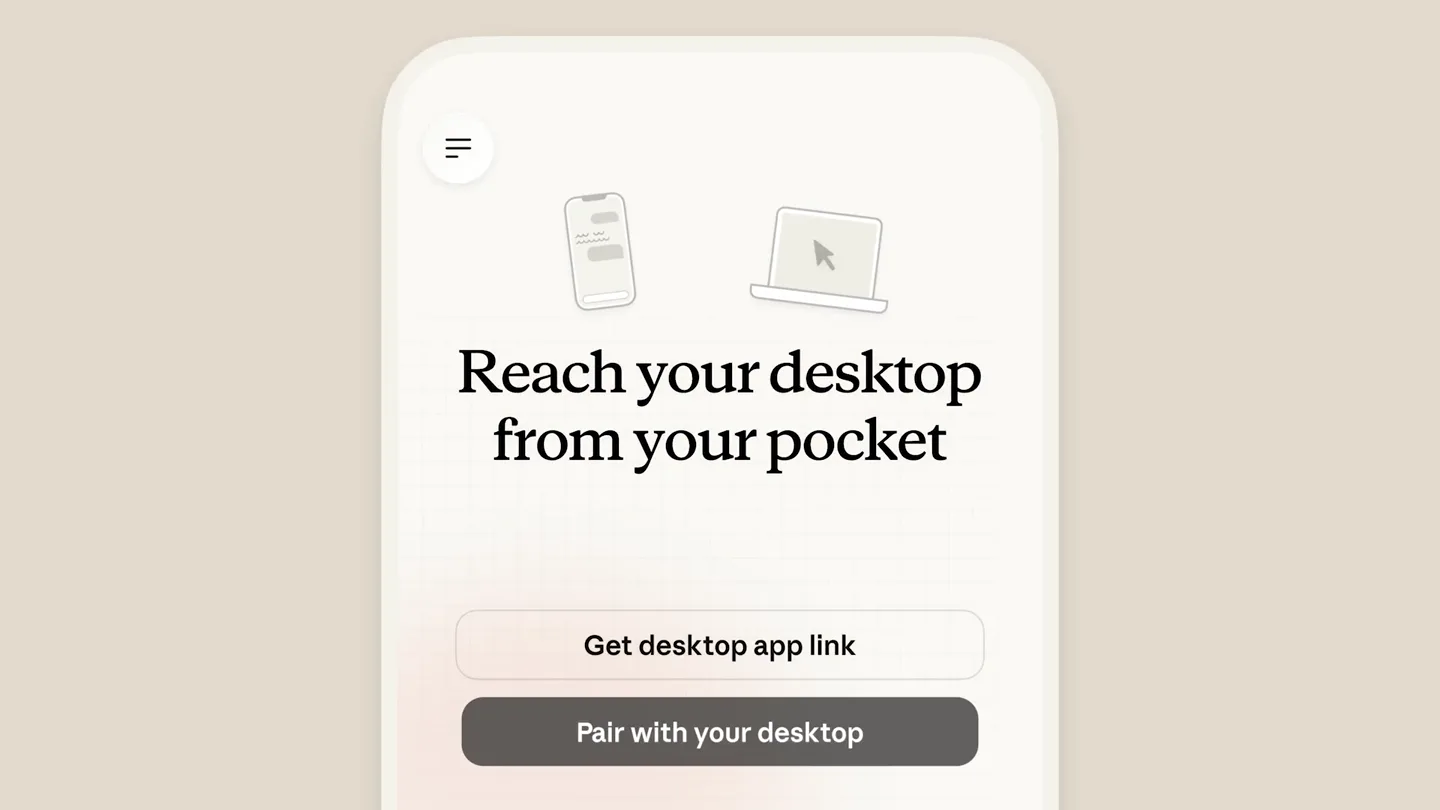
Claude can now operate your Mac, opening apps, browsing and filling spreadsheets, as a research preview in Cowork and Claude Code.

Agentic CLI for coding, building apps, and automating workflows.