
Pollen Robotics · Launch Video Breakdown: Hook, Pacing & Motion Design
Pollen Robotics shows Microduck walking, sitting, roller-skating, grabbing objects with its beak, and getting back up on its own.
Scene-by-scene timeline & spoken transcript
The Hook
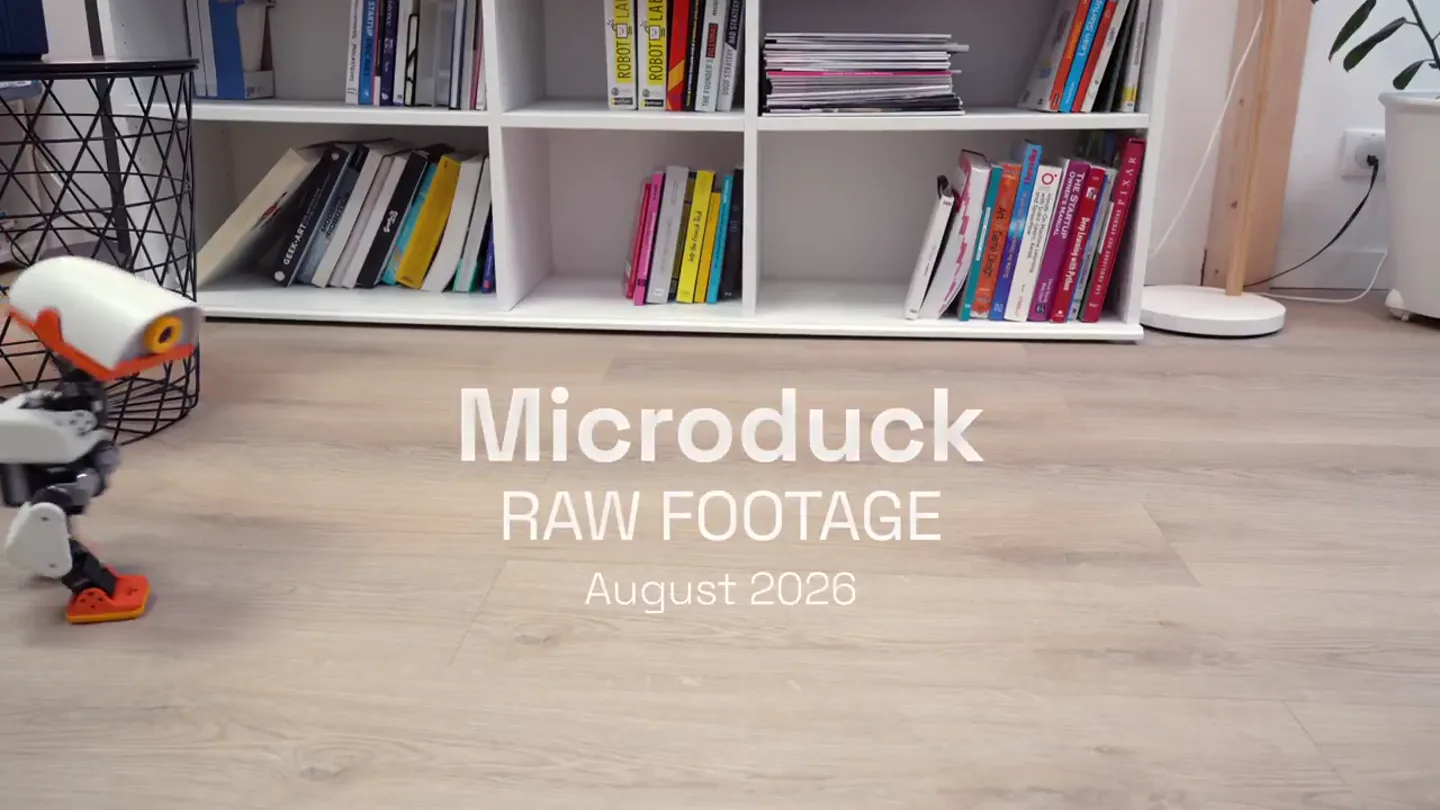
Microduck's Debut: Raw Footage
“(No spoken dialogue — percussive sounds, woodblock, scraping, tapping, and animal-like squeaks/squawks.)”
- On screen
- Microduck RAW FOOTAGE August 2026
- Camera
- Low-angle, eye-level shot of the robot, panning slightly to follow its movement. The camera is static for the initial text overlay, then tracks the robot as it walks into frame.
- Motion
- Text fade-in and fade-out, followed by a smooth camera pan to reveal the robot in motion. The robot itself exhibits a wobbly, almost organic walking animation.
Product Reveal
Agile Movement & Object Interaction
“(No spoken dialogue — continued percussive sounds, squeaks, and squawks, emphasizing the robot's movements.)”
- On screen
- Balance recovery Slow motion x0.25 Floor picking
- Camera
- Dynamic low-angle shots, often tracking the robot's movement. Includes a close-up on the robot's head and beak during object interaction. Some shots are static, focusing on the robot's action within the frame.
- Motion
- Slow-motion segments highlight specific actions like balance recovery. Text overlays appear and disappear with a subtle fade. The robot's movements are fluid and responsive, demonstrating its capabilities.
Feature Teaser
Versatile Mobility & Personality
“(No spoken dialogue — percussive and animal-like sounds continue, with a slightly more playful tone as multiple robots are shown.)”
- On screen
- Roller skating Chatting Every single Microduck has its own unique voice.
- Camera
- Wide-angle shot showing the robot roller-skating across a room. A static medium shot features multiple Microducks on a desk, with a slight zoom-in on the text overlay.
- Motion
- Smooth camera tracking for the roller-skating scene. Text overlays appear with a gentle fade. The multiple robots exhibit subtle, synchronized head movements, implying interaction and individual character.
Call to Action
Pollen Robotics: The Future of Robotics
“(No spoken dialogue — the audio transitions to a sustained, high-pitched tone, reminiscent of a sine wave or electronic feedback, which gradually increases in intensity and layers with the percussive elements.)”
- On screen
- (No on-screen text)
- Camera
- The video cuts to black, then likely continues with more dynamic shots of the robot in various environments, culminating in a brand reveal or call to action (based on typical launch video structure and the audio track findings).
- Motion
- A hard cut to black, signaling a transition or the end of a segment. The subsequent motion would likely involve a brand logo reveal or a call to action with accompanying motion graphics, building on the established playful yet technical aesthetic.
Motion design primitives
Synthesizable in Remotion · key components of the raw-footage-product-showcase template.
WobblyWalk
The robot exhibits a distinct, slightly unstable, yet controlled walking motion, conveying a sense of organic movement despite its mechanical nature. This includes subtle body sway and leg articulation.
+ Code construction recipe
Utilize `spring()` for joint movements with varying damping and stiffness to create a natural, slightly wobbly effect. Apply `interpolate()` for body sway based on a sine wave function over time, synchronized with leg animations.
DynamicTextOverlay
On-screen text appears and disappears with a soft, quick fade, often accompanied by a subtle scale or position shift, enhancing readability without distracting from the main action.
+ Code construction recipe
Implement `interpolate()` for `opacity` from 0 to 1 and back to 0, combined with a small `translateY` or `scale` transformation. Use `Sequence` and `AbsoluteFill` for precise timing and positioning over video footage.
ObjectInteractionHighlight
Specific actions, like picking up an object or recovering balance, are emphasized through slow-motion segments and focused camera work, drawing attention to the robot's precision and capabilities.
+ Code construction recipe
Control video playback speed using `setPlaybackRate()` for slow-motion effects. Employ `spring()` for camera movements (e.g., zoom, pan) to smoothly focus on the interaction point, ensuring a natural feel.
Style DNA & aesthetic system
Visual aesthetic
Typography
Motion
Special effects
Pacing & rhythm
Conceptual story rhythm
- 1
Introduction to Microduck
Purpose. To introduce the Microduck robot and establish its core identity and the context of the footage (raw, unedited).
Execution. Opening with a title card overlaying a static shot, then revealing the robot walking into frame with a smooth camera pan.
- 2
Demonstrating Core Capabilities
Purpose. To showcase Microduck's fundamental movements and interactions, emphasizing its agility and balance.
Execution. A series of short, focused clips demonstrating walking, balance recovery, and picking up small objects, often using slow-motion for emphasis.
- 3
Expanding on Versatility & Personality
Purpose. To highlight more advanced or unique features, and to convey the robot's potential for diverse applications and individual character.
Execution. Scenes of roller-skating and multiple robots 'chatting', with text overlays emphasizing unique voices and advanced behaviors.
- 4
Brand Reinforcement & Future Vision
Purpose. To conclude the narrative by reinforcing the brand and hinting at broader implications or future developments.
Execution. A cut to black, followed by a sustained, building audio tone, implying a transition to a brand reveal or call to action (though not explicitly shown in the provided frames).
Remix in Animatiq Studio
Master remix prompt · agent-ready
Sample remix
Objective
Launch a new smart pet feeder that dispenses food and interacts playfully with pets.How the recipe adapts
The video would open with 'SmartFeeder RAW FOOTAGE' text. It would show the feeder moving across the floor, dispensing food, and a pet interacting with it. Slow-motion would highlight the food dispensing mechanism and the pet's playful engagement. Dynamic text overlays would appear for 'Automated Dispensing' and 'Playful Interaction'. The camera would track the feeder at pet-eye level, and the audio would feature playful percussive sounds and pet-like chirps, building to a high-pitched tone for the brand logo reveal.Remix blueprint · raw-footage-product-showcase
Scene durations (4 scenes, 85.7s)
Key Remotion components
Related Hardware & Devices Product Launches
Explore all Hardware & Devices launches →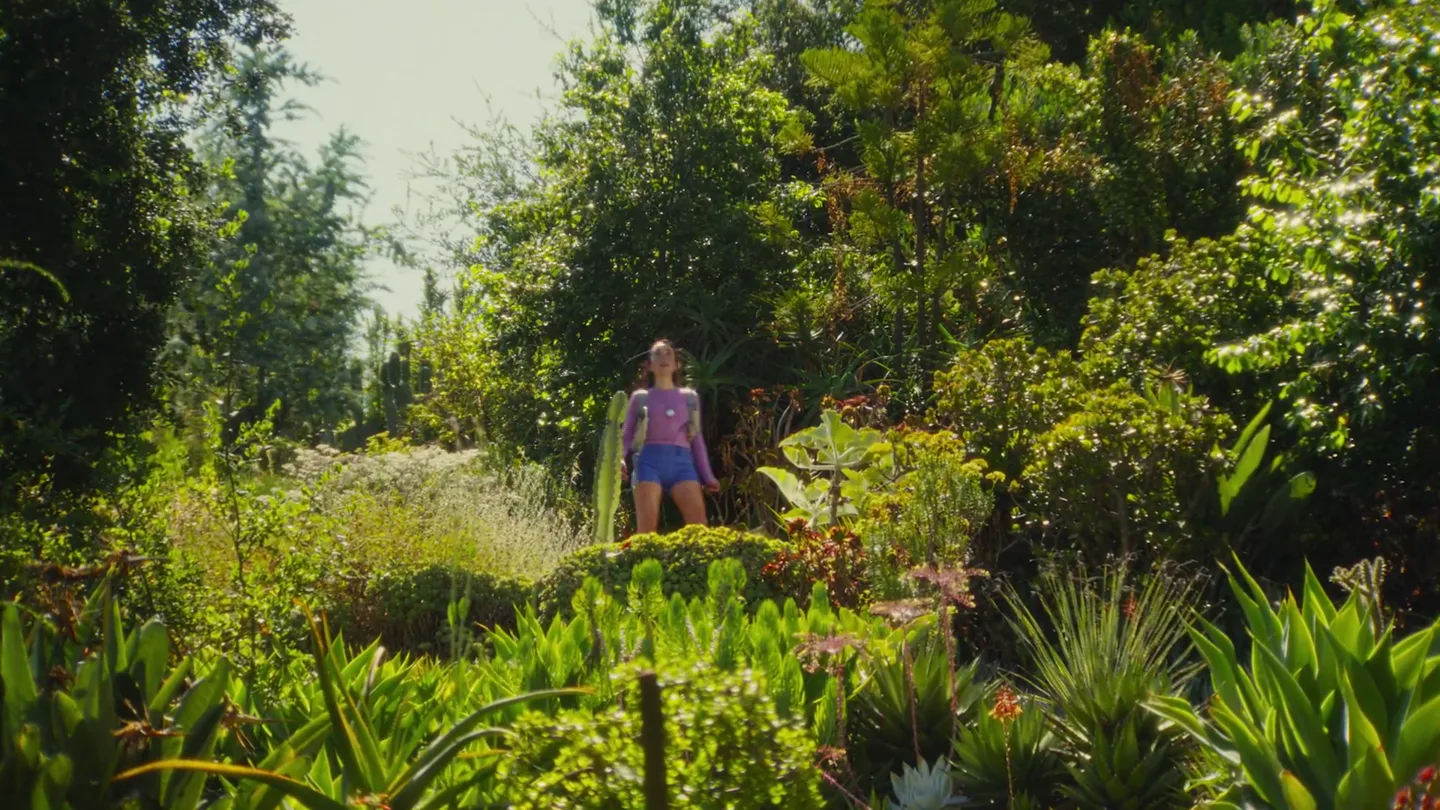
Friend's launch film for its wearable AI companion, with orders opening alongside the post.
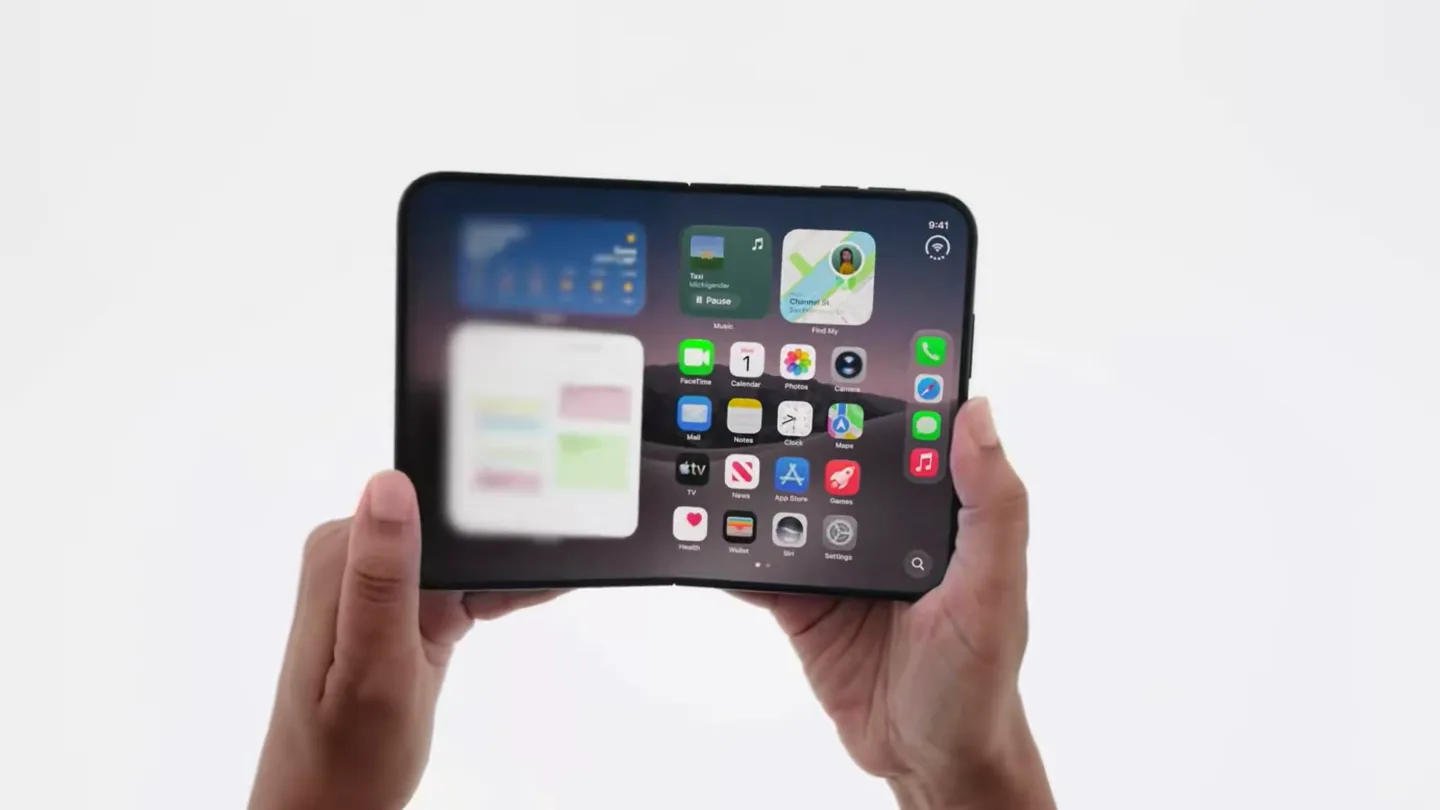
Official trailer for iPhone Duo.
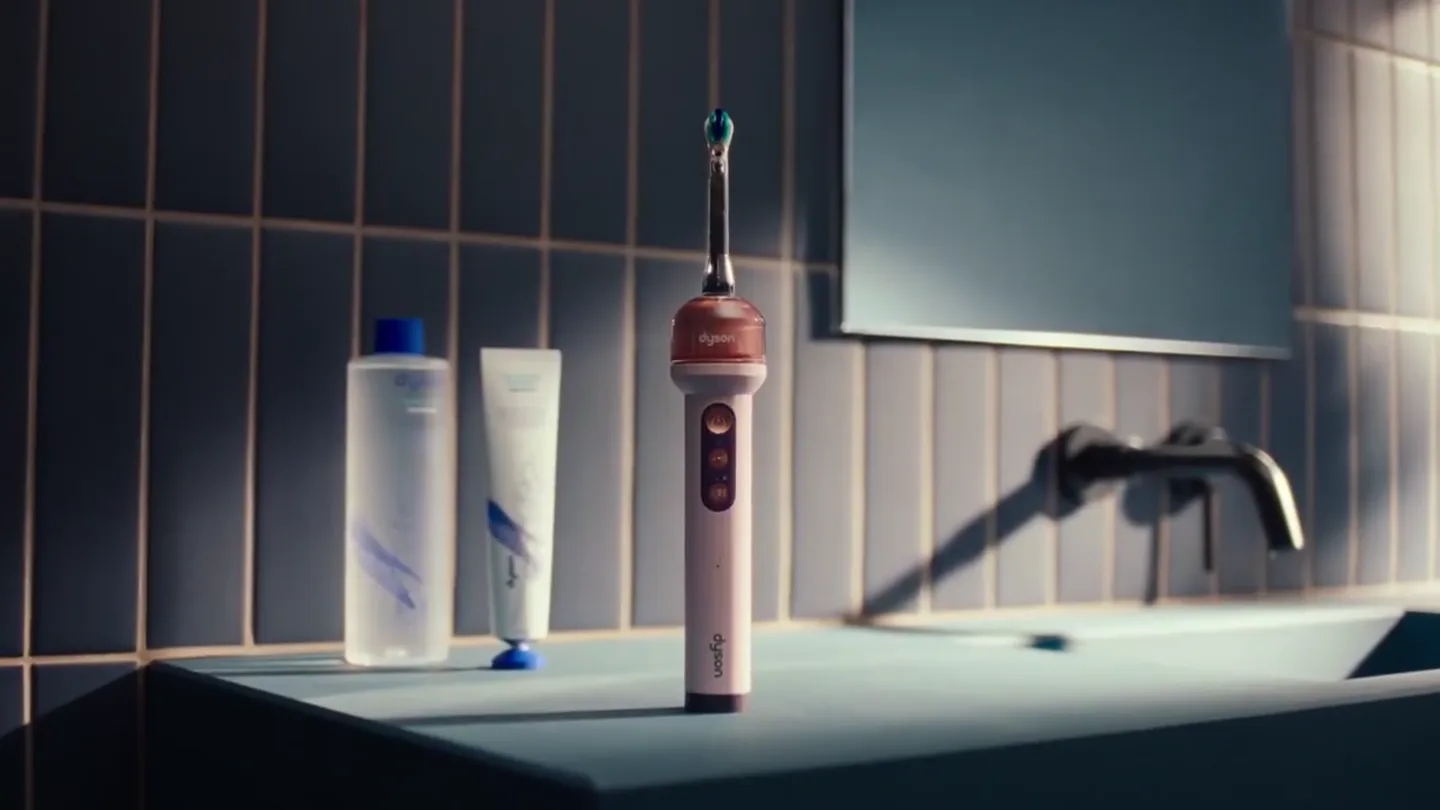
Dyson trained an AI on 470,000 dental images and put it inside a toothbrush with a camera that flosses in real time. CameraJet launched at $499.