
Hasan Toor · Launch Video Breakdown: Hook, Pacing & Motion Design
Minimax Hub just became the Claude of AI video. One desktop. Every model. 3x cheaper than Seedance. Image gen, video, audio, agents, light studio and all in one canvas. No more juggling 6 tabs and…
Scene-by-scene timeline & spoken transcript
The Hook
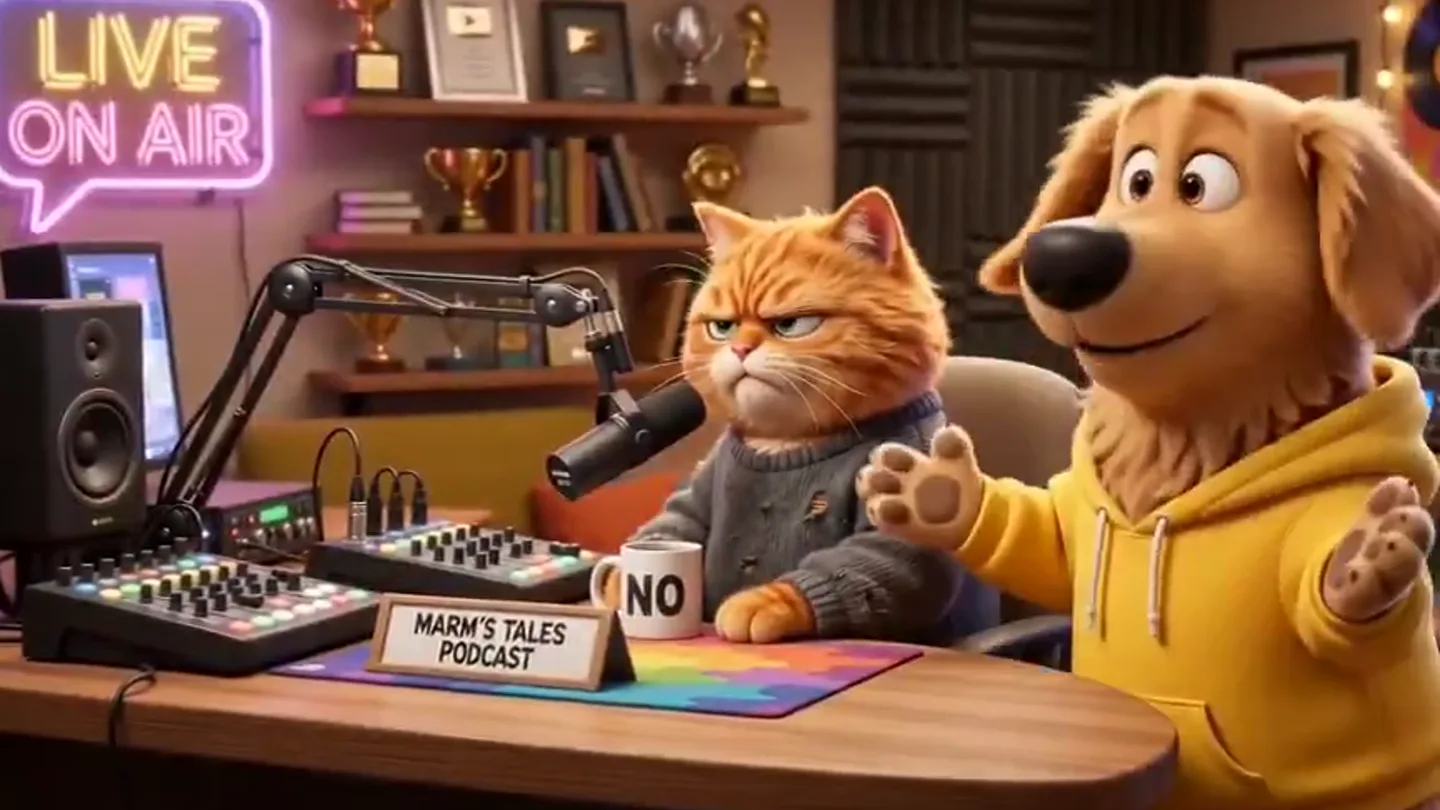
Grumpy Cat, Cheerful Dog Podcast Intro
“Oh, Monday. Fresh start. New week. New opportunities. New alarm to snooze.”
- On screen
- LIVE ON AIR, MARM'S TALES PODCAST, NO
- Camera
- Static medium shot of two animated animal characters (cat and dog) at a podcast desk.
- Motion
- Character animation, subtle facial expressions and gestures, lip-syncing.
Problem Agitation
Monday Morning Blues Dialogue
“Yeah, I'm not a morning person. I'm not a Monday person. I'm not a person person.”
- On screen
- LIVE ON AIR, MARM'S TALES PODCAST, NO
- Camera
- Static medium shot, maintaining the same framing as the previous scene.
- Motion
- Continued character animation, focusing on dialogue delivery and comedic timing.
Product Reveal
Podcast Name Change & Dog's Enthusiasm
“Well, I'm a person person. And I'm excited for today's episode. We've got a great one for you. And we've got a new name for the podcast.”
- On screen
- LIVE ON AIR, SUNNY SIDE UP, MARM & SUNNY PODCAST, NO, SUNNY
- Camera
- Subtle zoom out and pan right, revealing more of the set and the dog's headphones and hoodie. The podcast nameplate changes.
- Motion
- Subtle camera movement (zoom/pan), animated text change on the nameplate, character animation.
Call to Action
Closing Remarks & Thank You
“Marm and Sunny Podcast. Thank you for joining us. We'll see you next time. Bye.”
- On screen
- LIVE ON AIR, SUNNY SIDE UP, MARM & SUNNY PODCAST, NO, SUNNY
- Camera
- Static medium shot, similar to the previous scene, with minor character movements.
- Motion
- Character animation, dog waving goodbye, cat falling asleep.
Motion design primitives
Synthesizable in Remotion · key components of the animated-character-dialogue-launch template.
AnimatedDialogueCharacter
A 3D animated character (e.g., cat or dog) performs lip-syncing and subtle body language in response to spoken dialogue, conveying emotion and personality.
+ Code construction recipe
Utilize a 3D character rig with blend shapes for facial expressions and bone animation for body movements. Integrate audio analysis for precise lip-syncing. Animate keyframes for emotional beats and gestures, using `spring()` for natural, bouncy movements.
DynamicTextReveal
On-screen text elements, such as a podcast nameplate, dynamically change or update with a smooth transition, revealing new information.
+ Code construction recipe
Implement a `Sequence` component to manage the timing of text changes. Use `interpolate()` for opacity and scale transitions on text elements. For a nameplate, consider a `spring()` animation for a subtle 'pop' effect when new text appears.
SubtleCameraShift
The camera performs a gentle zoom or pan to subtly reframe the scene, revealing new details or emphasizing a character's action without a hard cut.
+ Code construction recipe
Animate the `transform` properties (scale, translateX, translateY) of the main scene container or camera component. Use `easing` functions like `easeOutCubic` or `spring()` for smooth, non-linear camera movements.
Style DNA & aesthetic system
Visual aesthetic
Typography
Motion
Special effects
Pacing & rhythm
Conceptual story rhythm
- 1
Opening Banter
Purpose. Establishes the characters and their contrasting personalities through humorous dialogue about mundane topics.
Execution. Static shot of two animated characters at a podcast desk, engaging in lip-synced conversation with expressive facial animations.
- 2
Relatable Complaint
Purpose. Deepens character connection by voicing a common, relatable sentiment (dislike of Mondays/mornings).
Execution. Continued static shot, focusing on the cat's grumpy expressions and the dog's cheerful demeanor during the dialogue.
- 3
The Reveal
Purpose. Introduces a new element (podcast name change) to signify a fresh start or new content direction.
Execution. Subtle camera zoom and pan, revealing more of the set and the dog's new branding, with an animated text change on the podcast nameplate.
- 4
Friendly Farewell
Purpose. Concludes the segment with a warm, appreciative closing, reinforcing the positive tone.
Execution. Static shot with the dog waving goodbye and the cat falling asleep, maintaining the established character dynamics.
Remix in Animatiq Studio
Master remix prompt · agent-ready
Sample remix
Objective
Launch a new AI-powered smart home device that simplifies daily routines.How the recipe adapts
Instead of a podcast studio, the setting would be a cozy living room with two animated animal characters (e.g., a wise owl and a curious squirrel) interacting with the smart home device. The dialogue would be a humorous conversation about daily struggles, with the device subtly introduced as a solution. Character animations would highlight the ease of use and benefits. Product features would be revealed through animated UI elements appearing on a screen within the scene, or through the characters' interactions with the device, using the DynamicTextReveal primitive for feature callouts. The camera would gently pan to showcase the device and its effects on the environment.Remix blueprint · animated-character-dialogue-launch
Scene durations (4 scenes, 30s)
Key Remotion components
Related Creative Tools Product Launches
Explore all Creative Tools launches →
Anthropic Labs launches Claude Design, which turns conversation into prototypes, slides and one-pagers, powered by Claude Opus 4.7.
A vibe design partner with an AI-native canvas for turning ideas into UI.
Your work tools in Claude are now available on mobile. Explore Figma designs, create Canva slides, check Amplitude dashboards, all from your phone. Give it a try: