
Rich kids of base · Launch Video Breakdown: Hook, Pacing & Motion Design
A father set out with the idea of building an app that shows his child what the objects around them are using Claude code, but suddenly he became the owner of an app that broke download records as…
Scene-by-scene timeline & spoken transcript
The Hook
Instant Object Recognition & Labeling
“(No spoken dialogue — High-energy riser/sweep, sub-bass drop/impact, synth pads, percussive electronic elements, deep resonant bassline.)”
- On screen
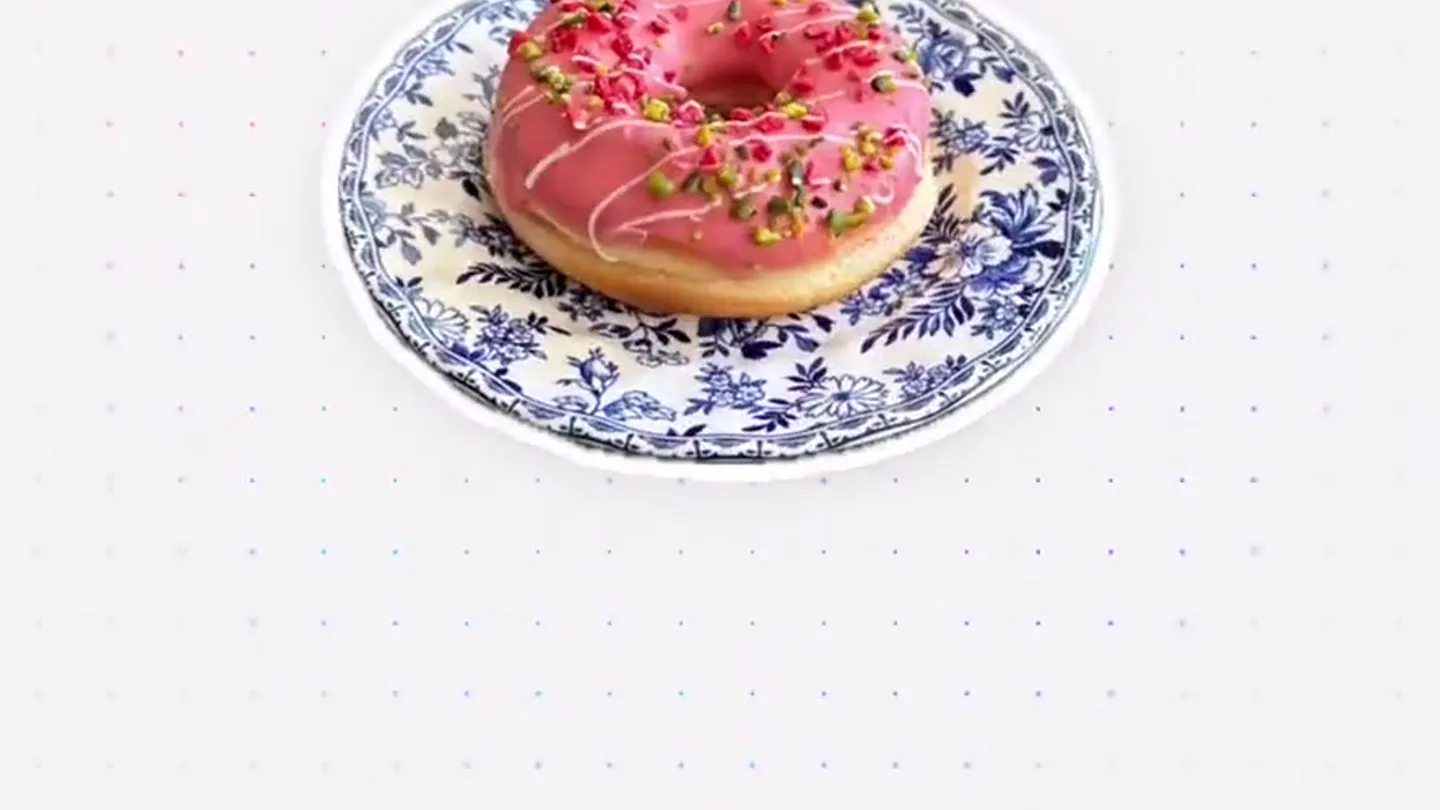
- 09:41 Feb 23 Donut 甜甜圈 Cancel Not what you expected? Tap to adjust
- Camera
- Close-up shot of a donut on a plate, then a slight zoom out to reveal the app interface. The camera remains static during the recognition process.
- Motion
- Quick cut from real-world object to app interface. Object recognition animation with glowing highlight and text pop-up. Subtle UI element transitions.
Product Reveal
Visual History & Multi-Language Support
“(No spoken dialogue — Driving, rhythmic electronic score continues with synth pads and percussive elements.)”
- On screen
- Feb 23 1 Words Donut Feb 21 8 Words Forest Iced tea 9:41 5月 07 1単語 Bread 5月 06 5単語 Clip Tape
- Camera
- Scrolling down through the app's history feed. The camera is static, simulating a screen recording.
- Motion
- Smooth vertical scroll animation, revealing previously identified objects. Each object appears as a card with an image and text label. Text changes from English to Japanese.
Feature Teaser
Real-time Scanning & AI Labeling
“(No spoken dialogue — The electronic score maintains its energetic rhythm, punctuated by subtle sound design elements.)”
- On screen
- 9:41 5月 07 オブジェクトをフレーム内に配置してください 9:41 5月 07 期待通りではありませんか?タップして調整 Toast トースト
- Camera
- Close-up on a sandwich, then a slight zoom out to show the app's scanning interface. The camera is static during the recognition.
- Motion
- Scanning animation with a bounding box appearing around the object. Glowing highlight and text pop-up for 'Toast'. UI elements transition smoothly.
Call to Action
Diverse Object Recognition & App Exploration
“(No spoken dialogue — The driving electronic score continues, building energy towards the end.)”
- On screen
- 9:41 5月 07 フレーム内に物体を配置してください 9:41 5月 07 Cup 컵 예상과 다릅니까? 탭하여 조정 May 07 5 Words Monstera Tape Binder clip Switch Credentia' May 01 2 Words Rubber duck Tissue box Apr 29 2 Words Coffee machine Beverage dispenser Apr 28 1 Words Apr 21 4 Words Komodo dragon Remote control Apr 20 2 Words Golden cudgel Roller skates Apr 19 34 Words Palm tree Barrier post
- Camera
- Close-up on a red cup, then a slight zoom out for app interface. Followed by rapid scrolling through the app's history, showcasing various recognized objects.
- Motion
- Scanning animation for the cup, followed by a quick transition to the history feed. Fast-paced vertical scrolling through diverse object recognition examples, demonstrating the app's versatility.
Motion design primitives
Synthesizable in Remotion · key components of the ai-object-translator-launch template.
ObjectRecognitionHighlight
A detected object is highlighted with a soft, glowing aura, followed by a text label appearing with a subtle bounce or fade-in animation, often accompanied by a sound icon.
+ Code construction recipe
Use a `spring` animation for the glow's opacity and scale. Text labels can use `interpolate` for position and opacity, with a `spring` for a slight overshoot on appearance. SVG filters for the glow effect.
DynamicHistoryScroll
A smooth, continuous vertical scroll through a list of previously recognized objects, each presented as a distinct card with an image and text label. The scroll speed can vary.
+ Code construction recipe
Implement a `Sequence` of `AbsoluteFill` components for each history item. Use `interpolate` for the `translateY` property of the container, driven by a linear or ease-out curve. Ensure efficient rendering for many items.
ScanningBoundingBox
A dashed or solid bounding box animates around an object, indicating the app's active scanning process. The box might pulse or subtly change size before recognition.
+ Code construction recipe
Create an SVG path for the bounding box. Animate `stroke-dasharray` and `stroke-dashoffset` for a 'marching ants' effect, or use `spring` for `scale` and `opacity` to create a pulse. Overlay this on the video feed.
Style DNA & aesthetic system
Visual aesthetic
Typography
Motion
Special effects
Pacing & rhythm
Conceptual story rhythm
- 1
The 'Aha!' Moment
Purpose. Immediately demonstrate the core value proposition: instant object identification.
Execution. A real-world object (donut) is shown, quickly scanned, and then its name appears with a satisfying visual and auditory cue.
- 2
Showcasing Versatility
Purpose. Illustrate the breadth of objects the app can recognize and its utility over time.
Execution. Rapid scrolling through a history feed of diverse, previously identified items, highlighting the app's extensive knowledge base.
- 3
Interactive Demonstration
Purpose. Engage the viewer by showing the live scanning process in action.
Execution. A new object (sandwich, cup) is placed in frame, the scanning animation plays, and the correct label appears, reinforcing the app's real-time capability.
- 4
The Endless Possibilities
Purpose. Conclude by emphasizing the app's comprehensive and ever-growing utility.
Execution. A final, accelerated scroll through an even wider array of recognized objects, leaving the viewer impressed by the app's potential.
Remix in Animatiq Studio
Master remix prompt · agent-ready
Sample remix
Objective
Launch a new AI-powered language learning app that identifies objects and translates their names into multiple languages.How the recipe adapts
The ObjectRecognitionHighlight primitive would be adapted to show an object, then its name in the native language, and then the translated name. The DynamicHistoryScroll would display a user's 'learned vocabulary' list, showing objects they've scanned and their translations. The ScanningBoundingBox would highlight text or objects for real-time translation. The overall pacing and energetic electronic score would be maintained to convey the app's efficiency and modern appeal.Remix blueprint · ai-object-translator-launch
Scene durations (4 scenes, 23s)
Key Remotion components
Related Developer Tools Product Launches
Explore all Developer Tools launches →
xAI opens voice cloning on its API: build a custom voice in about two minutes or pick from 80+ voices in 28 languages.
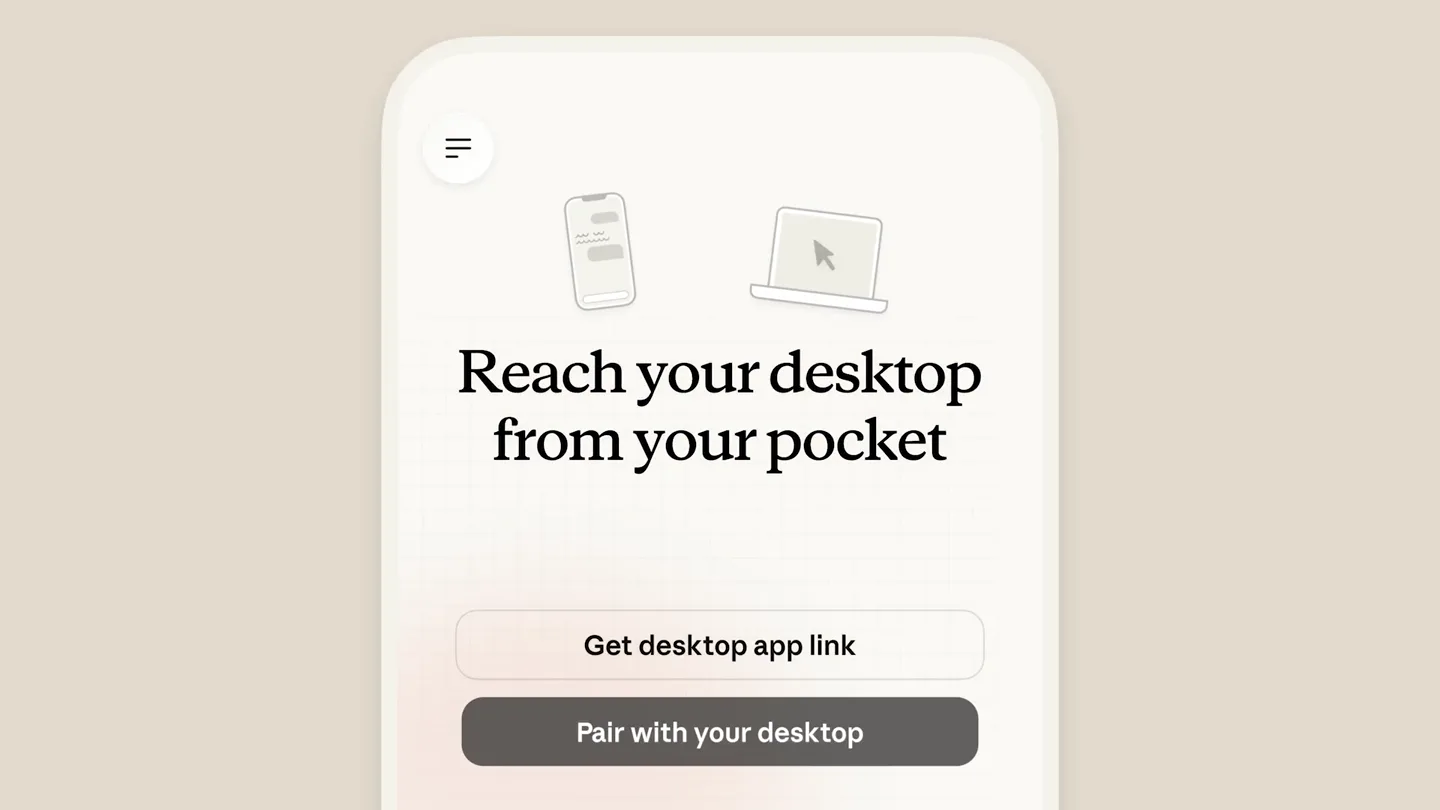
Claude can now operate your Mac, opening apps, browsing and filling spreadsheets, as a research preview in Cowork and Claude Code.

Agentic CLI for coding, building apps, and automating workflows.