
Paper · Launch Video Breakdown: Hook, Pacing & Motion Design
Quiver 2.0 ships in Paper: faster and higher-quality SVG generation, cleaner geometry, and a new Telos model for detailed work.
Scene-by-scene timeline & spoken transcript
The Hook
AI-Powered SVG Generation
“(No spoken dialogue — Ambient electronic score with a driving beat.)”
- On screen
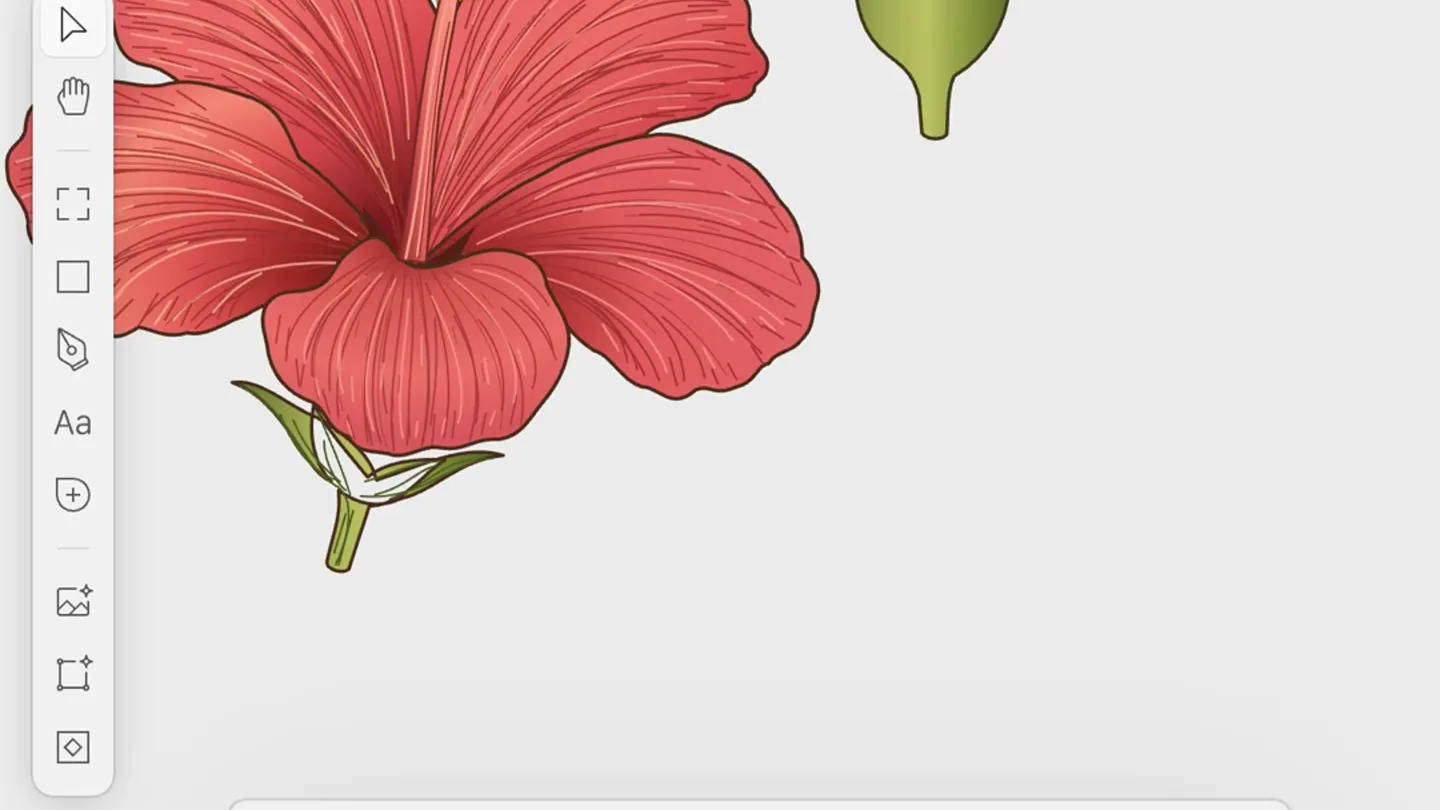
- technical accurate illustration of all parts of Hibiscus flower QuiverAI Arrow 2 Telos Create SVG Complete Flower Sepal Petal
- Camera
- Static, top-down view of a UI canvas. Elements appear and animate within the frame.
- Motion
- Stroke animation (drawing on), object reveal, text overlay, and subtle UI element interactions.
Product Reveal
Quiver Arrow 2.0 Integration
“(No spoken dialogue — Pizzicato synth melodies introduced, subtle riser at 0:08, distinct sub-bass drop/impact at 0:09.)”
- On screen
- Paper Quiver Arrow 2.0 now in Paper
- Camera
- Static, centered on text and logos.
- Motion
- Text fade-in, logo reveal with a subtle bounce, and a background grid pattern reveal.
Feature Teaser
Advanced SVG Models & Detail
“(No spoken dialogue — Driving electronic beat continues with pizzicato synth melodies.)”
- On screen
- Jolly valley Design Theme Botany Vintage Hibiscus illustration Stamen Anther Filament Style Ovary Ovules remove background and redraw as an engraving illustration. thick dark blue lines on white back, light hatching for shading, no fills, minimal number of strokes QuiverAI Arrow 2 Create SVG
- Camera
- Pan and zoom across UI elements and generated SVG illustrations.
- Motion
- Smooth camera pan, zoom-in to highlight detail, stroke animation for complex illustrations, and UI element transitions.
Feature Teaser
Versatile SVG Output
“(No spoken dialogue — High-energy electronic beat, impactful sub-bass drop at 0:24.)”
- On screen
- (No on-screen text)
- Camera
- Static, grid-based display of multiple objects.
- Motion
- Sequential object reveal within a grid, with objects animating into their final isometric forms.
Call to Action
Available Today
“(No spoken dialogue — Electronic beat fades out, leaving a lingering ambient tone.)”
- On screen
- available today at paper.design
- Camera
- Static, centered on the call to action.
- Motion
- Text reveal with a subtle fade-in and scale, logo animation, and background grid pattern.
Motion design primitives
Synthesizable in Remotion · key components of the ai-creative-tool-launch template.
StrokeRevealDraw
An SVG path or shape appears as if being drawn by a pen, revealing its outline and then filling with color. This is used for illustrating complex objects from a simple sketch.
+ Code construction recipe
Utilize `stroke-dasharray` and `stroke-dashoffset` properties on SVG paths, animating the `stroke-dashoffset` from its full length to zero. Follow with a `fill` opacity animation for color reveal.
IsometricGridPop
Objects appear sequentially within a grid layout, animating from a flat or wireframe state into a fully rendered isometric 3D form with a slight bounce.
+ Code construction recipe
Implement a `staggered` animation for grid items. Each item uses `transform` properties (scale, rotateX/Y/Z) for the isometric projection and `spring` for the bounce effect. Opacity and color interpolation can be used for the render reveal.
TextFadeScale
Text elements fade in while simultaneously scaling slightly, often accompanied by a subtle easing curve for a smooth, impactful reveal.
+ Code construction recipe
Animate `opacity` from 0 to 1 and `transform: scale()` from 0.95 to 1.0 with an `easeOutCubic` or `spring` interpolation. Can be applied to individual words or entire text blocks.
Style DNA & aesthetic system
Visual aesthetic
Typography
Motion
Special effects
Pacing & rhythm
Conceptual story rhythm
- 1
Instant Creation
Purpose. Showcase the core value proposition: rapid, high-quality SVG generation from simple input.
Execution. A quick sketch transforms into a detailed botanical illustration, demonstrating the 'Quiver 2.0' capability.
- 2
Product Integration
Purpose. Announce the new version and its availability within the 'Paper' platform.
Execution. A clean title card revealing 'Quiver Arrow 2.0 now in Paper' with associated logos.
- 3
Detail & Versatility
Purpose. Highlight the advanced capabilities of the new model, from intricate details to diverse output styles.
Execution. Zooming into the botanical illustration, then demonstrating 'engraving' style generation from photos, and finally a grid of various isometric objects being created.
- 4
Call to Action
Purpose. Direct users to where they can access the product.
Execution. A clear, concise screen with the product logo and website address.
Remix in Animatiq Studio
Master remix prompt · agent-ready
Sample remix
Objective
Launch a new AI-powered code generation tool, 'SyntaxFlow', that creates React components from natural language prompts.How the recipe adapts
The StrokeRevealDraw primitive would animate lines of code appearing in an IDE. The IsometricGridPop would showcase generated UI components (buttons, cards) assembling into a layout. TextFadeScale would highlight features like 'Instant React Components' and 'Clean, Optimized Code'. The color palette would shift to blues and greens, common in developer tools, while maintaining the energetic electronic soundtrack and fast pacing.Remix blueprint · ai-creative-tool-launch
Scene durations (5 scenes, 28.7s)
Key Remotion components
Related Creative Tools Product Launches
Explore all Creative Tools launches →
A vibe design partner with an AI-native canvas for turning ideas into UI.

We heard you wanted to use Codex rate limit resets on your own time. Starting today, we’re rolling out the ability to save rate limit resets to use later. We’re starting Go, Plus, Pro, and Business
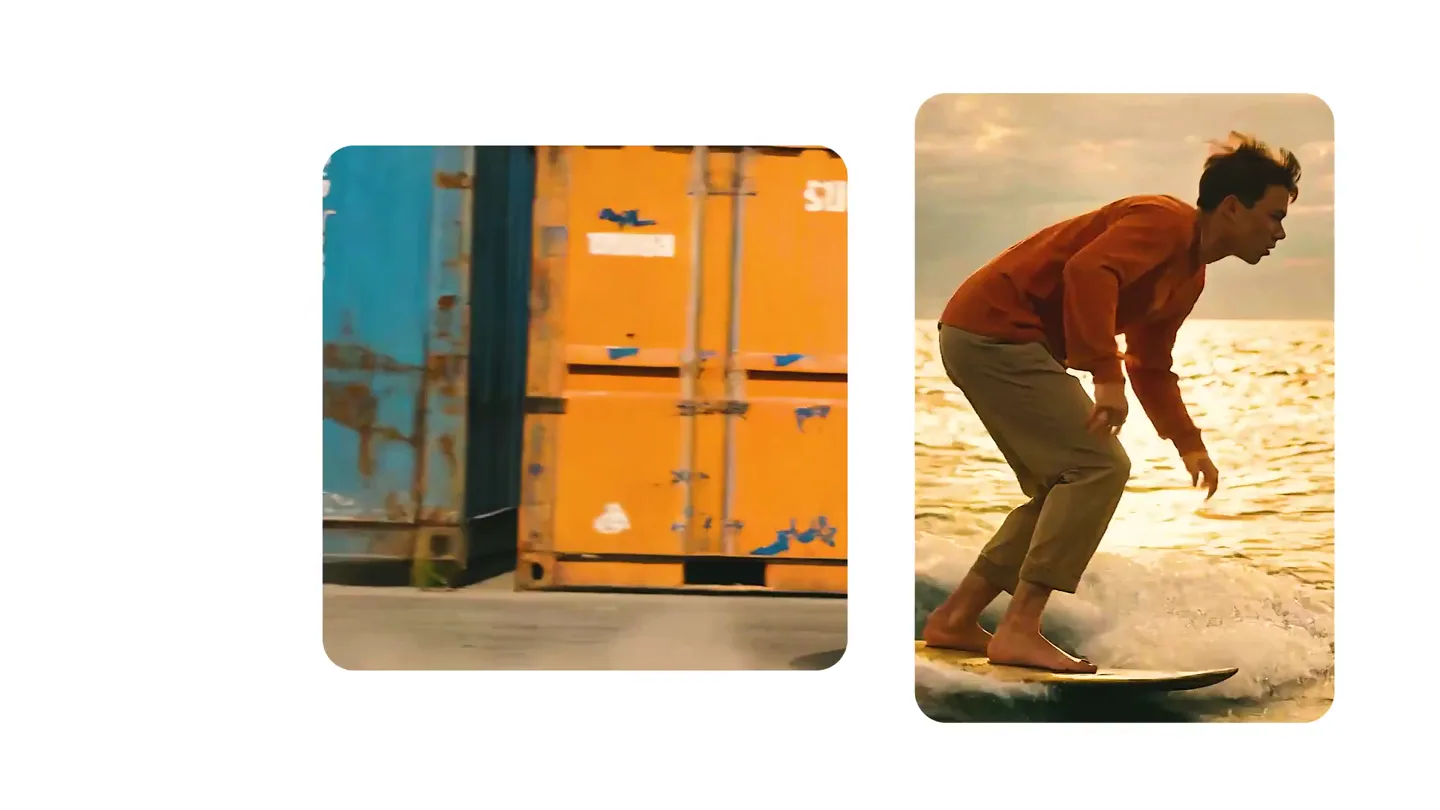
We just launched something the VFX community has been waiting for. OpenArt VFX lets you apply real visual effects to footage you already have. It lets you mask any region of your video and replace it with AI-generated content that matches the scene's lighting and physics. https://t.co/dnQjrZCWC4