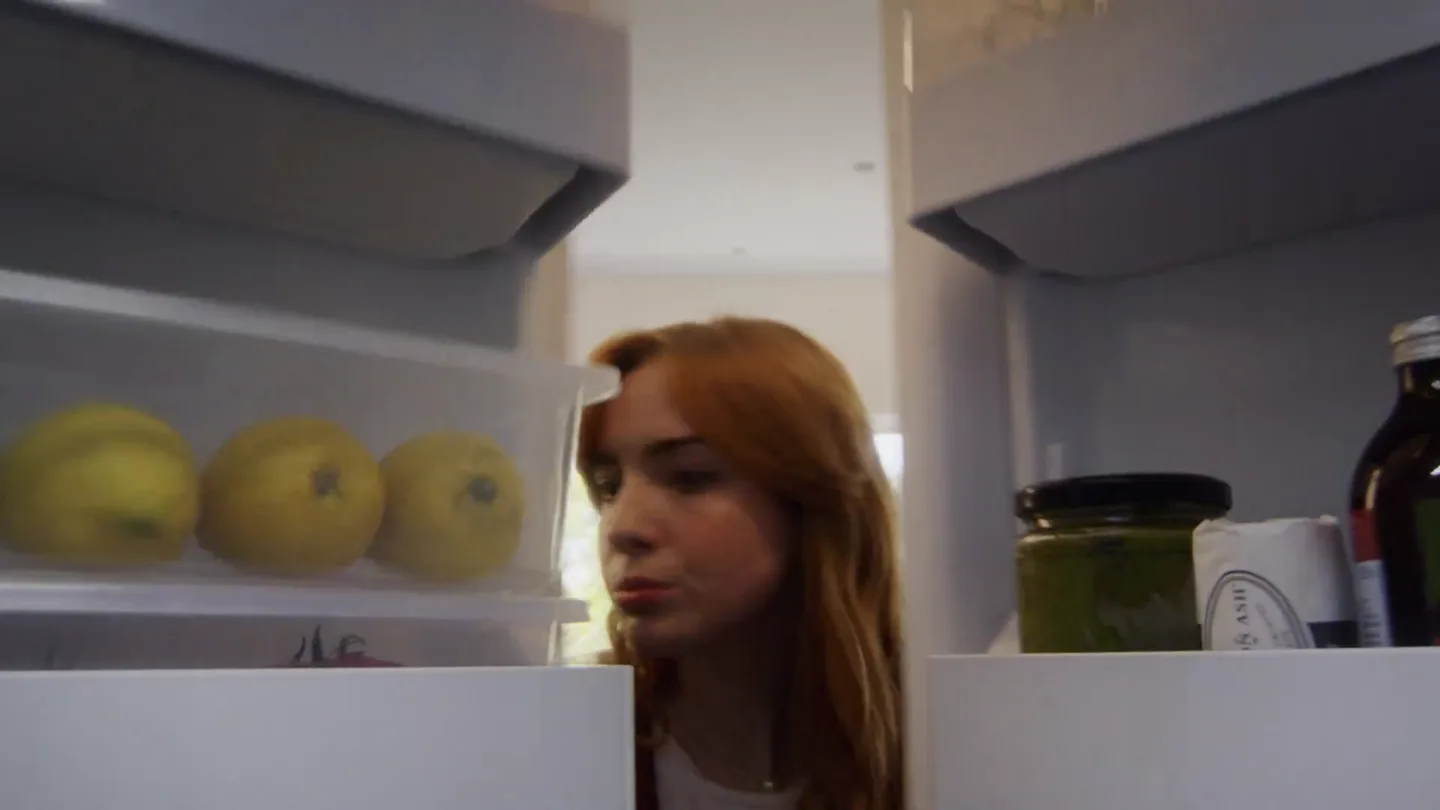

Space AI · Launch Video Breakdown: Hook, Pacing & Motion Design
Infinite space on your computer.
Scene-by-scene timeline & spoken transcript
The Hook
The Frustration of Full Disks
“I'm just trying to find this file... It's somewhere in here. Oh, come on! Your disk is full? Again?”
- On screen
- System Warning YOUR DISK IS FULL.
- Camera
- Begins with a tight close-up on a concerned face, then a wide, slightly elevated shot of a retro-styled office, quick cuts to other frustrated individuals, then a close-up on a CRT monitor displaying an error.
- Motion
- Quick cuts, subtle camera pushes on faces, digital glitch/scanline effect on the CRT monitor.
Problem Agitation
Drowning in Data & Disorganization
“It's not just digital, it's everywhere. How do we even manage all this? This is insane.”
- On screen
- (No on-screen text)
- Camera
- Dynamic low-angle tracking shot through a cluttered desk, close-ups on physical storage devices, medium shots of individuals looking confused or overwhelmed.
- Motion
- Dolly shots emphasizing claustrophobia, rapid cuts between different scenes of frustration, subtle camera shakes to convey agitation.
Product Reveal
Introducing Space AI: A Glimmer of Hope
“What if... there was a better way? An infinite file system?”
- On screen
- Download Space 01 - Projects Archive
- Camera
- Begins with a medium shot of a person smiling at a holographic-like modern UI, cuts to another person interacting with the UI, then a close-up on a retro monitor showing 'Download Space'.
- Motion
- Smooth camera pans revealing the modern UI, subtle glow and transparency effects for the holographic UI, a distinct 'thump' sound effect at 0:39 coinciding with a key visual reveal.
Feature Teaser
Seamless Workflow, Effortless Organization
“It just works. Everything, instantly accessible. No more limits.”
- On screen
- Space 01 - Projects
- Camera
- Medium shots of happy, productive individuals interacting with the new, clean UI, a wide shot of the transformed, organized office with the 'Space' logo prominently displayed.
- Motion
- Fluid UI animations, subtle camera movements that glide through the improved workspace, a significant uplifting synth riser and sweep at 0:54 marking a transition to a more resolved section.
Call to Action
Experience Infinite Space
“(No spoken dialogue — The audio features a resolved and melodic section, concluding the piece with a sense of accomplishment and clarity.)”
- On screen
- Your team's new favourite file system. Space AI Infinite space on your computer.
- Camera
- Static shot of the final tagline, followed by a logo animation and potential website URL.
- Motion
- Clean text reveal, subtle background animation or gradient, smooth fade to black.
Motion design primitives
Synthesizable in Remotion · key components of the infinite-space-fast-cut-montage template.
RetroCRTGlitchOverlay
Simulates an old CRT monitor display with visible scanlines, subtle screen curvature, and intermittent chromatic aberration or digital noise. Text and UI elements appear pixelated or slightly distorted, mimicking low-resolution displays.
+ Code construction recipe
Utilize Remotion's <AbsoluteFill> with a <Shader> component. Implement a GLSL shader for scanlines, barrel distortion (for screen curvature), and a noise() function for static/glitch effects. Chromatic aberration can be achieved by sampling texture at slightly offset UVs for R, G, B channels. Text should be rendered with a pixel font and potentially an SVG filter for dither.
HolographicUIProjection
Modern, clean UI elements (folders, files, windows) appear as translucent, glowing projections within a physical space. They have a subtle depth, soft edges, and react to light sources in the scene, suggesting they are floating.
+ Code construction recipe
Render UI components as standard React elements. Apply CSS filter: blur() for soft edges and opacity for translucency. For the glowing effect, use box-shadow with a spread and blur, or a pseudo-element with a radial gradient. Integrate with 3D scene data (e.g., using react-three-fiber within Remotion) to project UI onto virtual planes that align with the physical environment, allowing for perspective shifts and light interaction.
EnvironmentalMorphTransition
A scene or environment subtly transforms from one state (e.g., cluttered, retro) to another (e.g., clean, modern). This isn't a hard cut but a fluid, almost magical shift in textures, colors, and object arrangements, often accompanied by a subtle light change or energy wave.
+ Code construction recipe
For 2D, use masked reveals or SVG path morphing for elements. For 3D (if the scene is rendered in 3D), use blend shapes or shader-based material transitions (e.g., mix() function in GLSL to interpolate between two sets of textures/colors based on a time uniform). A simpler approach for 2D video is to use a CrossFade component with a custom easing curve, combined with scale and opacity animations on individual elements to simulate a 'tidying up' effect.
DynamicTextReveal
Text elements (headlines, taglines, product names) appear with a clean, impactful animation. This could be a subtle letter-by-letter reveal, a quick scale-up with a slight overshoot, or a wipe effect, always maintaining legibility and brand presence.
+ Code construction recipe
Use Remotion's Sequence and spring() or interpolate() for individual character animations. For a letter-by-letter reveal, map each character to a spring() animation with a staggered delay. For a scale-up, use scale and opacity with an overshoot easing function. Wipes can be achieved with clipPath or mask-image CSS properties animated over time.
Style DNA & aesthetic system
Visual aesthetic
Typography
Motion
Special effects
Pacing & rhythm
Conceptual story rhythm
- 1
The Everyday Struggle
Purpose. Establish the relatable problem of digital and physical clutter, creating empathy with the audience.
Execution. Close-ups of frustrated individuals, retro computer screens displaying 'disk full' errors, and wide shots of a disorganized, overwhelming office environment.
- 2
Amplifying the Pain Points
Purpose. Intensify the audience's understanding of the problem's scope and impact on productivity and well-being.
Execution. Dynamic camera movements through piles of physical files and storage devices, individuals looking stressed or confused, mundane office activities highlighting inefficiency.
- 3
The Breakthrough Moment
Purpose. Introduce the product as the innovative solution, shifting the narrative from problem to possibility.
Execution. A sudden visual shift to a modern, clean UI appearing as a holographic projection, a clear 'Download Space' call on a retro screen, and a subtle change in character expressions from frustration to curiosity.
- 4
Vision of a Better Future
Purpose. Demonstrate the product's core benefits and how it transforms the user experience.
Execution. Happy, productive individuals seamlessly interacting with the new UI, the office environment visibly transforming into an organized, efficient space, and the 'Space' logo integrated into the scene.
- 5
The Promise of Infinite Potential
Purpose. Reinforce the product's unique value proposition and its long-term impact.
Execution. Final branding elements, a clear tagline emphasizing 'infinite space,' and a concluding shot that conveys a sense of calm, order, and technological advancement.